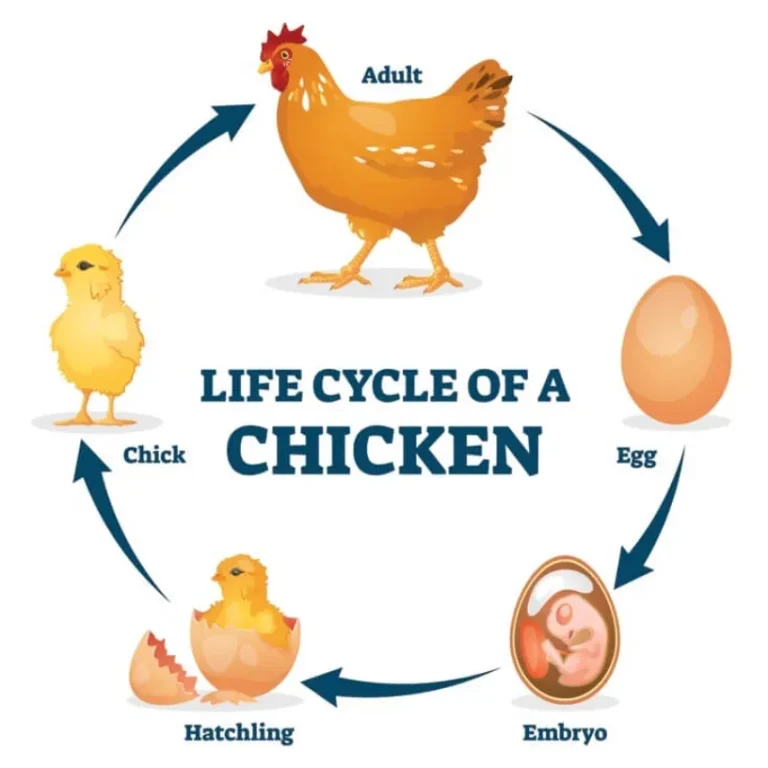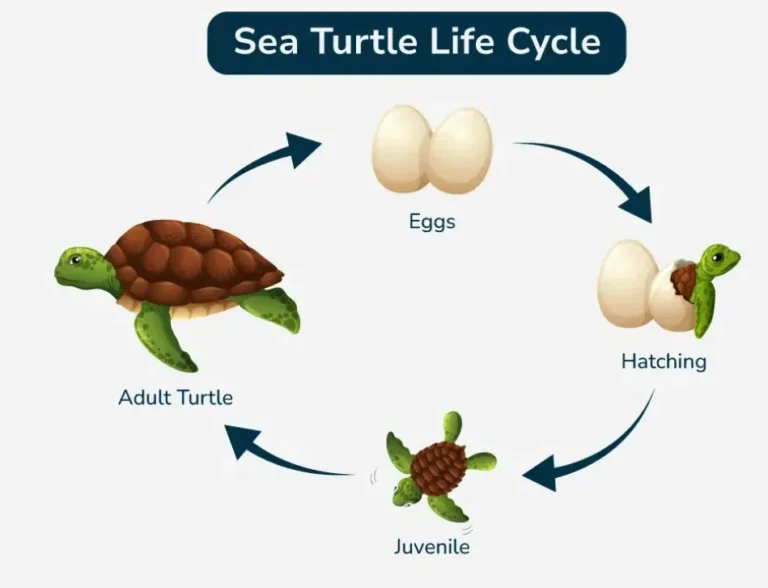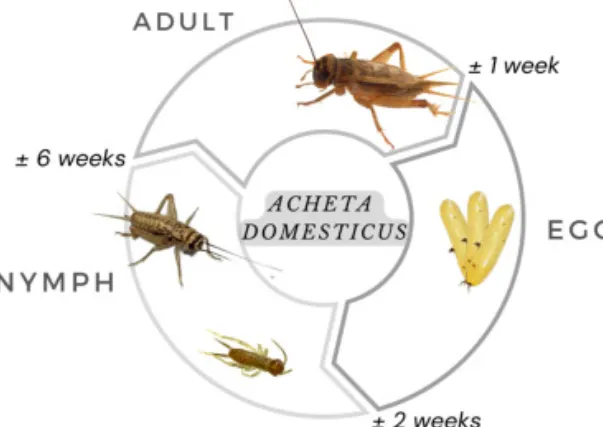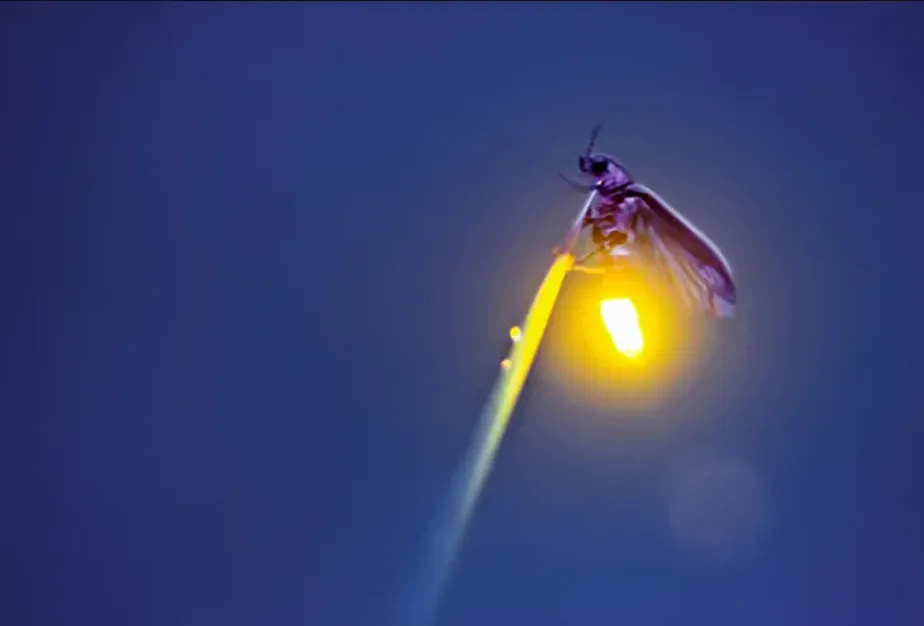
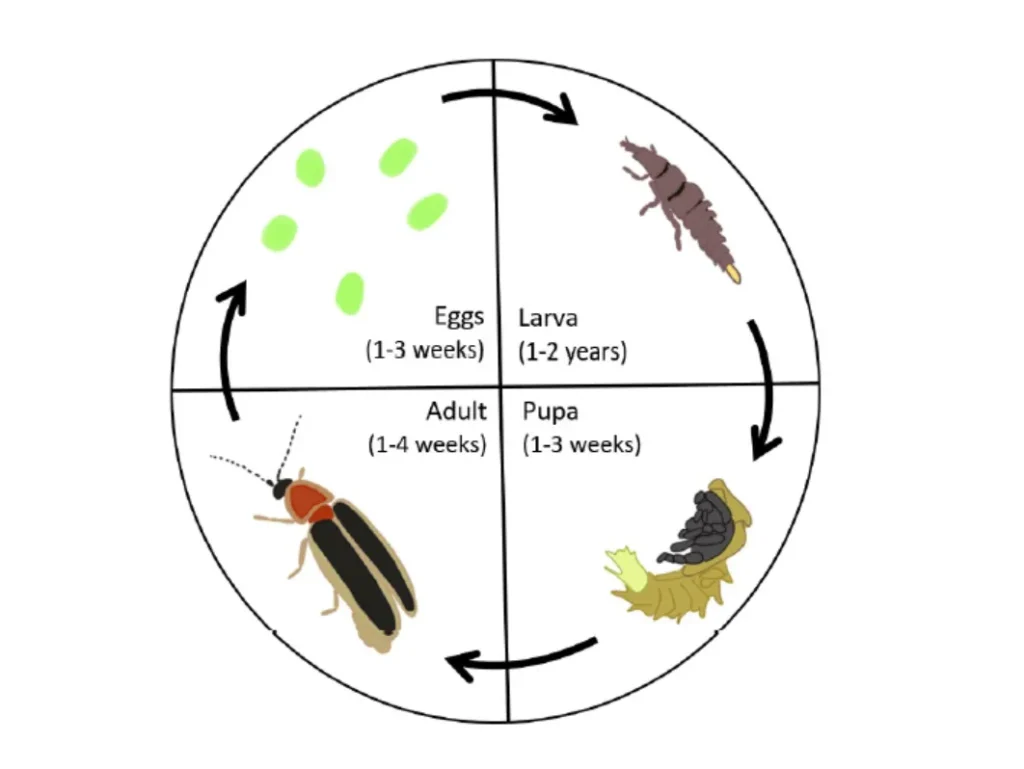
The life cycle of the lightning bug is one of nature’s most fascinating transformations. A lightning bug, also called a firefly, is not a true fly and not a true “bug” in the strict scientific sense. It is a soft-bodied beetle from the family Lampyridae. Like other beetles, it undergoes complete metamorphosis, meaning its life cycle has four major stages: egg, larva, pupa, and adult.
Most people notice lightning bugs only during summer nights, when adults flash over grass, gardens, woods, wetlands, and fields. But the glowing adult stage is only the final part of their life. In many species, lightning bugs spend most of their time as larvae hidden in moist soil, leaf litter, rotting wood, moss, or wet habitat edges.
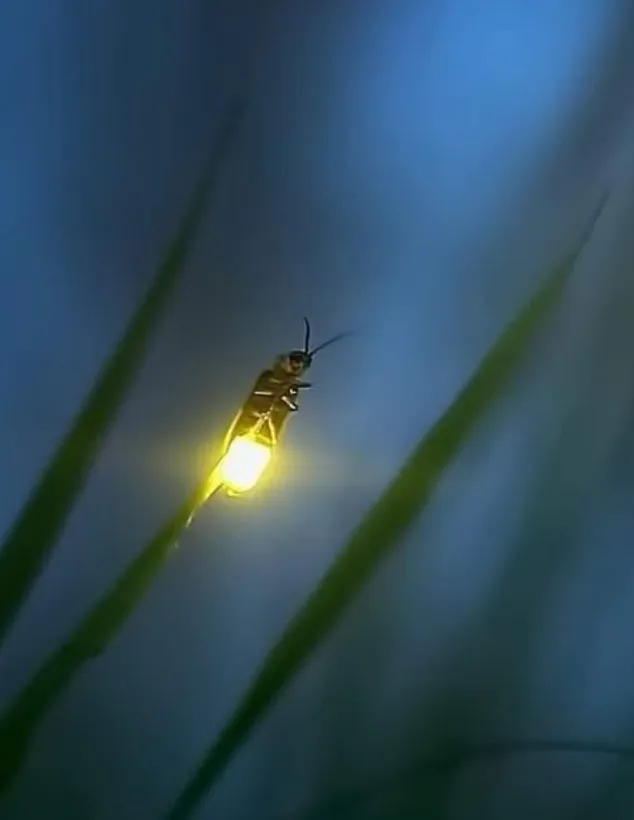
Their glow is produced by bioluminescence, a chemical reaction inside specialized light organs. This light helps adults communicate during mating, and in many larvae, it may also act as a warning signal to predators.
Quick Answers: Most Common Questions
Q: What are the four stages of the lightning bug life cycle?
A: The four stages are egg, larva, pupa, and adult. This is called complete metamorphosis.
Q: How long does a lightning bug live?
A: The full life cycle may last several months to two years or more, depending on species and climate. The adult glowing stage usually lasts only one to four weeks in many common species.
Q: Are lightning bugs and fireflies the same?
A: Yes. Lightning bug and firefly are common names for the same group of beetles in the family Lampyridae.
Quick Life Cycle Table
| Stage | Where It Happens | Main Activity | Typical Time |
| Egg | Damp soil, moss, leaf litter | Embryo develops | About 3–4 weeks in many species |
| Larva | Soil, leaf litter, rotting wood, wet edges | Hunts soft-bodied prey | Several weeks to 2+ years |
| Pupa | Soil chamber, mud, bark, protected place | The body changes into an adult | About 1–3 weeks |
| Adult | Grass, fields, forests, gardens, wetlands | Flashes, mates, lays eggs | Often 1–4 weeks |
Important Things That You Need To Know
Many people search for lightning bug facts because the name appears in science, pop culture, tattoos, and even places. For SEO and reader clarity, it is helpful to understand these related terms naturally.
First, lightning bug vs firefly and firefly vs lightning bug mean the same thing in everyday language. In some regions, people say “firefly,” while others say “lightning bug.” Scientifically, both names refer to beetles in the family Lampyridae, not flies.
A lightning bug tattoo usually symbolizes hope, guidance, childhood memories, summer nights, transformation, or inner light. This makes sense because the insect undergoes a dramatic transformation from a hidden larva to a glowing adult.
The phrase lightning bug from ” The Princess and the Frog usually refers to Ray, the Cajun firefly character from Disney’s animated film. That character is fictional, but it helped make Fireflies emotionally meaningful to many viewers.
The phrase lightning bug golf course is different. It refers to golf-related places or local course names, not the insect’s biology. For example, Tennessee Golf Foundation materials describe Lightning Bug Golf Course as a family-friendly nine-hole course in Tennessee.
So, while these LSI keywords connect to different search intents, the biological meaning stays the same: a lightning bug is a glowing beetle with a remarkable life cycle.
The History Of Their Scientific Naming, Evolution, and Their Origin
Scientific Naming of Lightning Bugs
Lightning bugs belong to the beetle order Coleoptera and the family Lampyridae. The family name is connected to the idea of shining or torch-like light. Many familiar genera include Photinus, Photuris, Pyractomena, Lampyris, and Pteroptyx.
Why They Are Not True Bugs or Flies
The names firefly and lightning bug are common names, not strict scientific labels. They are not flies because flies belong to the order Diptera. They are not true bugs because true bugs belong to Hemiptera. Lightning bugs are beetles, with beetle-style metamorphosis and wing covers called elytra.
Evolution of Their Glow
Scientists believe firefly bioluminescence likely began as a defensive warning signal, especially in larvae, and later became important for adult mating communication. Modern research continues to examine how firefly light, toxins, and mating signals evolved together.
Ancient Origin
Fireflies are an old beetle lineage. Fossil and evolutionary studies show that bioluminescent fireflies existed by the Cretaceous period, showing that their glow has deep evolutionary roots.
Their Reproductive Process, Giving Birth And Rising Their Children
Courtship Starts with Flash Signals
Adult lightning bugs reproduce through light-based courtship. In many species, males fly and flash a specific pattern. Females usually wait on vegetation or near the ground and answer with their own flash. These patterns help the right species find each other in the dark.
Mating and Egg Laying
After mating, the female lays fertilized eggs in moist places such as soil, moss, leaf litter, or damp plant material. Moisture is important because firefly eggs and young larvae can dry out easily. Some sources report that females of certain species may lay many eggs, but the exact number depends strongly on species and conditions.
Do Lightning Bugs Give Birth?
Lightning bugs do not give live birth like mammals. They reproduce by laying eggs. The eggs develop outside the mother’s body, then hatch into larvae.
Do Parents Raise Their Young?
Lightning bugs do not provide parental care. Once eggs are laid in a suitable damp habitat, the young must survive on their own. The larva emerges ready to hunt, hide, grow, molt, and eventually pupate.
Why Habitat Choice Matters
The mother’s egg-laying site is one of the most important “care” decisions. Damp soil, natural leaf litter, native vegetation, and low artificial light create better survival conditions for the next generation.
Stages of the Life Cycle: Lightning Bug Life Cycle
1. Egg Stage
The life of a lightning bug begins as a tiny egg laid in damp soil, moss, or leaf litter. In many species, eggs hatch after about three to four weeks, although timing changes with temperature, humidity, and species. Some firefly eggs may even glow faintly when disturbed.
This stage is delicate. If the ground dries out, gets compacted, or is treated with harsh chemicals, egg survival can fall. That is why natural garden edges, unmowed areas, and leaf litter are useful for firefly reproduction.
2. Larva Stage
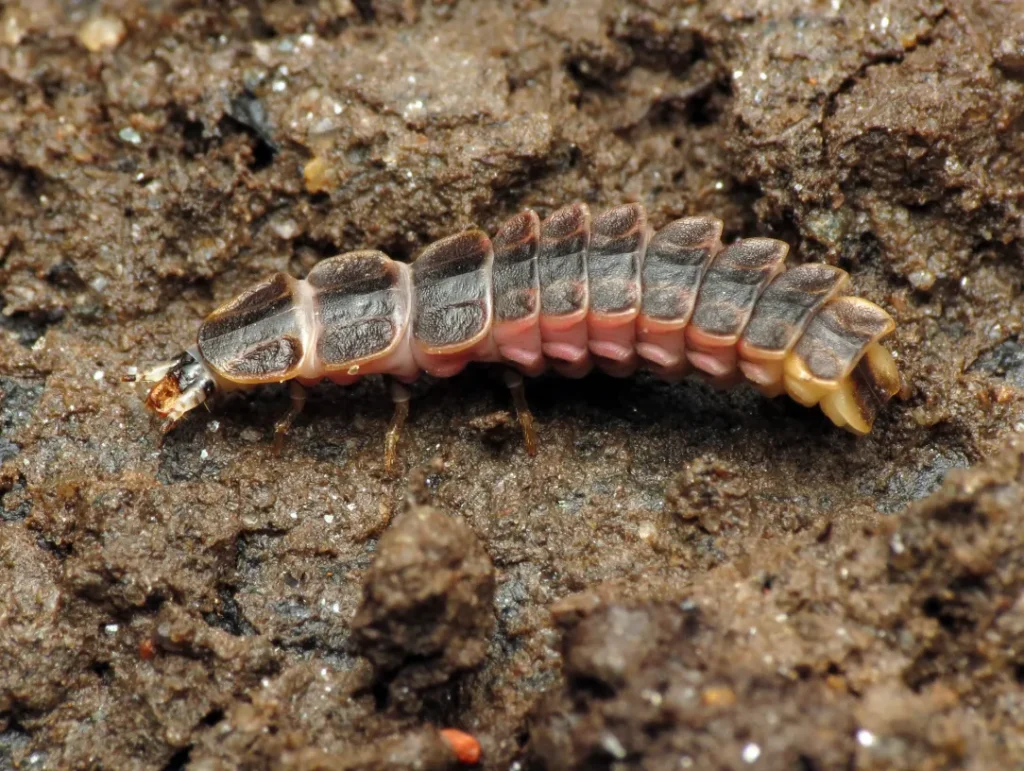
The larva is the longest and most hidden stage. Lightning bug larvae are sometimes called glowworms because many can glow from small light organs. They usually live in soil, mud, rotting wood, moss, bark crevices, or damp leaf litter.
Larvae are active hunters. They feed on soft-bodied prey such as snails, slugs, worms, and other small invertebrates. They use specialized jaws and digestive chemicals to subdue prey.
3. Pupa Stage
When the larva has grown enough, it enters the pupa stage. This may happen in a soil chamber, mud cell, leaf litter pocket, bark area, or another protected place. During the pupal stage, the insect undergoes metamorphosis into its adult form.
Wings, adult legs, antennae, reproductive organs, and adult light organs develop. This is a quiet but dramatic transformation.
4. Adult Stage
The adult lightning bug is the glowing beetle people recognize on warm evenings. Adults focus mainly on finding mates and reproducing. Some adults feed on nectar, pollen, dew, or small insects, while others eat little or nothing.
The adult stage is short but important. It creates the next generation and keeps the summer light show alive.
Their Main Diet, Food Sources, And Collection Process Explained
Lightning bugs have different diets depending on their life stage. The larval stage is usually the main feeding stage, while the adult stage is often focused on reproduction.
Larval Diet
Lightning bug larvae are mostly predators. They commonly eat:
- Snails
- Slugs
- Worms
- Soft-bodied insects
- Other small soil or leaf-litter animals
Larvae often hunt in damp, dark places where prey animals are active. They may crawl through leaf litter, under logs, beside wet soil, or in mossy ground. Many firefly larvae use jaws and digestive secretions to overpower prey.
Adult Diet
Adult diet varies widely. Some adult lightning bugs eat:
- Nectar
- Pollen
- Dew or moisture
- Small insects
- Other fireflies are predatory species
Some adults barely feed at all. In those species, the adult emerges from the larval stage with stored energy, which it uses to mate and lay eggs.
Food Collection Process
Larvae do not collect food like ants or bees. They search, stalk, and attack prey directly. Adults also do not store food. Their “collection” is usually simple feeding from flowers, moisture sources, or prey when needed.
This diet makes lightning bugs helpful in gardens because larvae naturally reduce populations of slugs and snails.
How Long Does A Lightning Bug Live
The lifespan of a lightning bug depends on species, climate, moisture, habitat quality, and whether we are talking about the full life cycle or only the adult glowing stage.
- Full life cycle: Many fireflies live about one to two years in total, but some species develop faster, and some take longer. The larval stage usually takes the largest share of this time.
- Egg stage: In many common species, eggs hatch in about three to four weeks. Warmer, moist conditions can support development, while dry or disturbed soil can reduce success.
- Larval stage: The larva may live for several weeks, several months, or up to two years or more. During this period, it feeds, grows, molts, and stores energy.
- Pupal stage: Pupation often lasts around one to three weeks, although timing differs by species. The insect is not simply “resting”; it is rebuilding its body into adult form.
- Adult stage: Adult lightning bugs usually live for a short time. Oklahoma State University Extension notes that adults may live for 1 to 4 weeks, focusing mainly on reproduction.
- Common eastern firefly example: For Photinus pyralis, Animal Diversity Web lists adult lifespan in the wild at about 5 to 30 days.
- Why adults die quickly: Many adult lightning bugs invest their energy into flashing, mating, and egg laying. Some species do not feed much as adults, so they depend on energy stored from the larval stage.
- Biggest survival risks: Dry soil, mowing, pesticides, habitat loss, artificial night lighting, and climate stress can reduce survival at different life stages.
In simple terms, lightning bugs spend most of their lives hidden, then appear briefly as glowing adults.
Lightning Bug Lifespan in the Wild vs. in Captivity
Lifespan in the Wild
In the wild, lightning bugs live in a complex but natural system. Eggs develop in moist soil, larvae hunt in leaf litter, pupae transform in protected sites, and adults flash in open-but-sheltered spaces.
Wild lightning bugs may complete their life cycle in one to two years, depending on the species. The adult stage is usually brief, often only a few weeks.
Lifespan in Captivity
Captivity is difficult because lightning bugs need very specific moisture, food, soil, temperature, darkness, and seasonal cues. Researchers have successfully reared some species, but it takes careful care. Butterfly Pavilion reported successful rearing of a Colorado firefly species through two years of care, feeding, misting, and enclosure adjustment.
Which Is Better?
For most people, the wild is better. Catching adults in jars may stress or kill them, especially if they cannot mate or lay eggs. Observing and releasing them quickly is safer than keeping them.
Importance of Lightning Bug In This Ecosystem
Natural Pest Control
Lightning bug larvae eat slugs, snails, worms, and other soft-bodied prey. This helps naturally balance soil and garden ecosystems. They are not a replacement for full pest management, but they are part of a healthy food web.
Food Web Support
Lightning bugs are prey for birds, spiders, amphibians, reptiles, and other insects. Some fireflies contain defensive chemicals that make them unpleasant to eat, but they still play a role in predator-prey relationships.
Soil and Leaf Litter Indicators
Because larvae need moist, undisturbed, living ground layers, their presence often suggests healthier habitat conditions. Areas with natural leaves, fewer pesticides, and less light pollution are usually better for fireflies.
Pollination and Plant Connections
Some adult fireflies visit flowers for nectar or pollen. They are not usually major pollinators like bees, but they still interact with flowering plants.
Cultural and Educational Value
Lightning bugs connect people to nature. They encourage children and adults to notice insects, seasonal cycles, wetlands, forests, and the importance of darkness at night.
What To Do To Protect Them In Nature And Save The System For The Future
1. Reduce Artificial Light at Night
- Turn off unnecessary garden, porch, and landscape lights.
- Use motion sensors instead of leaving lights on all night.
- Choose warm-colored, shielded outdoor lights.
- Close curtains at night to reduce window glow.
Artificial light can interfere with firefly courtship flashes and reduce mating success.
2. Avoid Pesticides and Lawn Chemicals
- Do not spray broad-spectrum insecticides in firefly habitat.
- Avoid chemical slug killers where larvae hunt.
- Use organic and targeted methods only when necessary.
Pesticide exposure is one of the major threats identified by firefly conservation experts.
3. Keep Leaf Litter and Natural Ground Cover
- Leave some leaves under shrubs and trees.
- Keep logs, mossy corners, and natural mulch.
- Avoid over-cleaning every garden edge.
Larvae need these protected, moist places to hide, hunt, and survive.
4. Mow Less and Grow Native Plants
- Let some grass grow taller.
- Plant native flowers, shrubs, and grasses.
- Keep damp edges near gardens, ponds, or wooded areas.
Natural vegetation supports prey, moisture, and places for adult resting.
5. Protect Wetlands and Woodland Edges
- Do not drain small wet areas unnecessarily.
- Reduce soil disturbance near streams and marshes.
- Support local land protection and citizen science.
Fireflies face habitat loss, light pollution, pesticides, climate change, and other pressures, so local habitat protection matters.
Fun & Interesting Facts About Lightning Bug
- Lightning bugs are beetles, not flies and not true bugs.
- Their family name is Lampyridae.
- The glow is a form of bioluminescence created by a chemical reaction.
- In many species, males and females use flash patterns like a coded conversation.
- Some larvae glow even while living under soil, bark, or leaf litter.
- Many lightning bug larvae are helpful predators of slugs and snails.
- Adult lightning bugs often live only a few weeks.
- Some adult fireflies do not eat much or do not eat at all.
- Different species flash at different heights, times, colors, and rhythms.
- Photuris females are famous for mimicking other species’ flash patterns and eating attracted males.
- Some firefly species glow steadily instead of flashing.
- Fireflies are found in temperate and tropical regions, but not in Antarctica.
- They prefer moist habitats such as meadows, woodland edges, wetlands, gardens, and stream borders.
- Their glow is often called “cold light” because very little energy is wasted as heat.
- A healthy firefly habitat is usually darker, damper, and less chemically treated than a typical manicured lawn.
Frequently Asked Questions (FAQs)
Q: What is the life cycle of a lightning bug?
A: The life cycle of a lightning bug has four stages: egg, larva, pupa, and adult. The larva usually lasts longest, while the glowing adult stage is short.
Q: How long do lightning bugs stay as larvae?
A: Many lightning bugs spend months to two years or more as larvae, depending on species, weather, and food availability.
Q: What do baby lightning bugs eat?
A: Baby lightning bugs are larvae. They usually eat soft-bodied prey such as snails, slugs, worms, and small invertebrates.
Q: Why do lightning bugs glow?
A: Adults glow mostly to find mates. Larval glowing may help warn predators that they are not good to eat. The glow is made through bioluminescence.
Q: Are lightning bugs disappearing?
A: Many firefly populations are under pressure from habitat loss, artificial light at night, pesticide use, climate change, and wetland disturbance. Some species are more at risk than others.
Final Word
The life cycle of a lightning bug is much deeper than a few glowing flashes on a summer night. A lightning bug begins as an egg in moist ground, grows as a hidden predator larva, transforms in the pupal stage, and finally appears as a glowing adult built for courtship and reproduction.
Understanding this life cycle helps us protect them. If we remove leaf litter, spray chemicals, mow every corner, drain damp places, and fill the night with artificial light, we damage the invisible stages that make the visible glow possible.
The good news is that simple actions matter. Darker nights, native plants, natural soil cover, fewer pesticides, and protected moist habitats can help lightning bugs survive. When we protect lightning bugs, we also protect soil life, wetlands, gardens, and the quiet beauty of summer nights.
About the Author