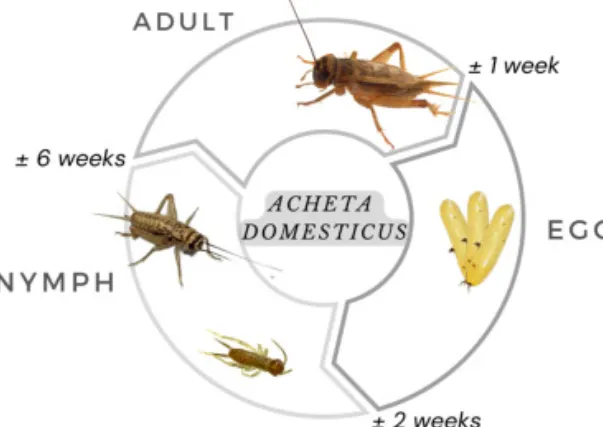
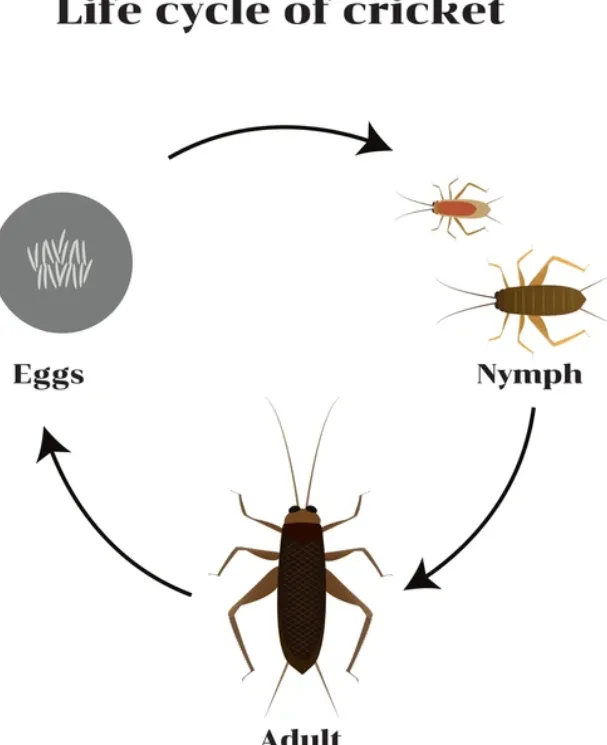
The cricket‘s life cycle is one of the simplest yet most interesting examples of insect development. Crickets do not pass through a butterfly-like complete metamorphosis. Instead, they undergo incomplete metamorphosis, meaning the young cricket looks like a smaller version of the adult.
A cricket begins life as an egg, usually laid in soil, plant material, or another soft, safe place. After hatching, it becomes a nymph. The nymph has long antennae, strong jumping legs, and a cricket-like body, but it lacks fully developed wings and reproductive organs.
As the nymph grows, it sheds its outer skin several times. This process is called molting. After multiple molts, the cricket becomes an adult. Adult crickets can reproduce, make sound, search for mates, and complete the natural cycle by laying eggs again.
Most people notice crickets because of their chirping at night. The familiar cricket insect sound usually comes from males, which rub their forewings together to attract females or defend territory. Crickets are also important in nature because they feed on plant material, organic waste, and sometimes weak or dead insects.
Q: What are the main stages in the life cycle of the cricket insect?
A: The main stages are egg, nymph, and adult. For easier understanding, the nymph stage can be divided into early and late nymphs, yielding a practical four-stage explanation.
Q: How long does a cricket insect live?
A: Many common crickets live around two to three months, but this depends on species, temperature, food, humidity, predators, and habitat conditions.
Q: Why do crickets make sounds?
A: Male crickets usually make sounds by rubbing their forewings together. This sound helps them attract females, communicate, and warn rival males.
Quick Life Cycle Table
| Stage | What Happens | Common Time Range |
| Egg | Females lay eggs in soil, cracks, plant stems, or soft material | About 1–3 weeks, depending on the temperature |
| Early Nymph | Tiny cricket hatches and starts feeding | First few days to weeks |
| Late Nymph | Cricket molts several times and develops wing pads | Around 5–10 molts in many species |
| Adult | A fully grown cricket can mate, chirp, and reproduce | Often, 6–8 weeks in many common crickets |
Important Things That You Need To Know
When people search for the life cycle of the cricket, they often want to understand more than just eggs and adults. They also want to identify the insect, hear its sound, or compare different cricket types.
The phrase cricket insect sound usually refers to the chirping made by male crickets. This sound is not made with the mouth. It is produced when the male rubs one forewing against the other. The sound can change depending on species, temperature, age, and the purpose of the call.
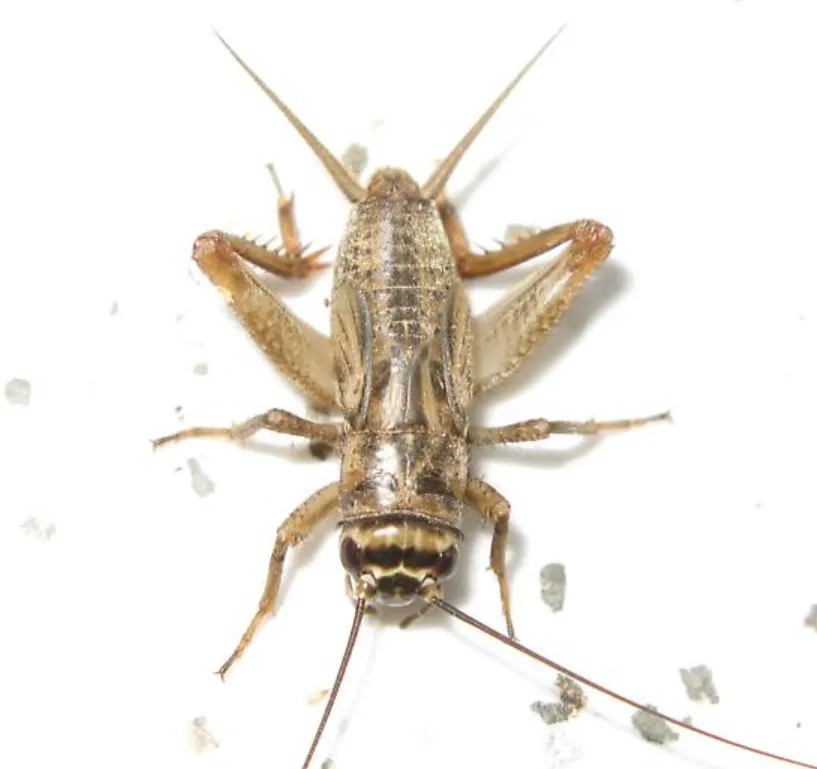
People also search for cricket insect images because crickets are sometimes confused with grasshoppers, katydids, cockroaches, or camel crickets. A true cricket usually has long antennae, strong hind legs, and two thin sensory appendages at the back called cerci.
The house cricket is one of the best-known cricket types. It is usually light yellowish-brown with darker bands behind the head. It often appears near warm places, food waste, lights, basements, garages, and outdoor garbage areas.
A cricket insect close-up image is useful because it shows key body features: long antennae, compound eyes, wing veins, jumping legs, and the female ovipositor. These details help readers understand how crickets move, sense their environment, reproduce, and survive.
The History Of Their Scientific Naming, Evolution, and Their Origin
Scientific Naming
Crickets belong to the insect order Orthoptera, the same broad order that includes grasshoppers and katydids. True crickets are commonly placed in the family Gryllidae. The well-known house cricket is scientifically named Acheta domesticus.
The word Gryllidae is linked with the traditional scientific grouping of true crickets. Scientific names help researchers identify cricket species clearly, because common names can change from country to country.
Evolutionary Background
Crickets are ancient insects with a long evolutionary history. Their body plan is built for jumping, hiding, sensing vibration, and producing sound. Over time, different cricket groups adapted to grasslands, forests, caves, homes, farms, and even underground spaces.
Origin And Spread
Crickets are now found in many parts of the world. The house cricket insect is especially widespread because it can live near humans and survive in warm indoor or semi-indoor environments.
Their global success comes from flexible feeding habits, rapid reproduction, strong jumping legs, and the ability to use sound for mating communication.
Their Reproductive Process, Giving Birth And Rising Their Children
Mating Behavior
Crickets do not give birth to live babies like mammals. They reproduce by laying eggs. The process begins when a male produces a calling song to attract a female. In many species, the female approaches the male after hearing a suitable call.
The male may then produce a softer courtship song. After mating, sperm is transferred to the female, allowing her to fertilize eggs.
Egg Laying
Female crickets have a long, tube-like organ called an ovipositor. This helps them place eggs into soil, plant stems, cracks, or soft organic material. The egg-laying place must be moist enough to protect the eggs but not so wet that they rot.
A female may lay many eggs during her adult life. The number depends on species, food quality, age, and temperature.
Raising Their Children
Crickets do not raise their children in the way birds or mammals do. After eggs are laid, the female does not feed or protect the young.
When the eggs hatch, the tiny nymphs must survive on their own. They begin feeding on small pieces of plant matter, soft organic material, and other available food.
Survival Of Young Crickets
Young nymphs face many dangers. Birds, spiders, frogs, lizards, ants, beetles, and other predators may eat them. Only a portion of the eggs and nymphs survive long enough to become adults.
This is why crickets lay many eggs. High egg production increases the chance that some young will complete the life cycle.
Stages of the Life Cycle of the Cricket Insect
Stage 1: Egg
The first stage of the cricket’s life cycle ect is the egg. Female crickets usually place eggs in soil or soft material where moisture and temperature are suitable.
Cricket eggs are small and delicate. Warm temperatures usually promote faster development, while cold or dry conditions can delay hatching or reduce survival.
Stage 2: Early Nymph
After hatching, the cricket becomes an early nymph. This stage looks like a tiny adult, but without fully developed wings. The body is soft at first, so the young cricket hides until its outer skin becomes harder.
Early nymphs begin eating quickly because growth requires energy. They may feed on small plant particles, decaying matter, soft leaves, or other available organic food.
Stage 3: Late Nymph
The late nymph stage is the main growth period. During this stage, the cricket molts several times. Each molt allows the body to become larger.
Wing pads become more visible as the cricket matures. The cricket also becomes stronger, faster, and better at escaping predators.
Stage 4: Adult
The adult stage begins after the final molt. Adult crickets have mature wings, reproductive organs, and stronger body structures.
Male adults can produce sound. Female adults can mate and lay eggs. Once reproduction begins, the cycle continues through the next generation.
Their Main Diet, Food Sources, And Collection Process Explained
Natural Diet
Crickets are generally omnivorous, which means they can eat both plant and animal-based material. Their food depends on species, habitat, and availability.
In nature, crickets may feed on leaves, grass, seeds, fruits, seedlings, fungi, decaying plants, and dead insects. Some crickets also eat weak or injured insects, including other crickets.
Food Sources Around Homes
The house cricket insect can feed on crumbs, plant material, pet food, food scraps, fabric, paper, and organic waste. They are often attracted to warm, sheltered places with available food.
This is why house crickets may appear in garages, kitchens, basements, storage rooms, and areas near garbage.
How Crickets Collect Food
Crickets use their long antennae to sense their surroundings. Their antennae help them detect food, moisture, vibration, and danger.
They usually search for food at night because many crickets are nocturnal. Night activity helps them avoid daytime predators and dry heat.
Feeding Role In Nature
Crickets help break down organic matter. By eating plant debris and dead material, they support nutrient cycling in soil.
At the same time, they become food for many animals. This makes them an important link between plants, decomposing matter, and predators.
How long does the life cycle of a cricket last
The lifespan of a cricket depends on species, temperature, humidity, food, predators, and whether it lives in the wild or in captivity. There is no single lifespan for every cricket, but common types often live for a few months.
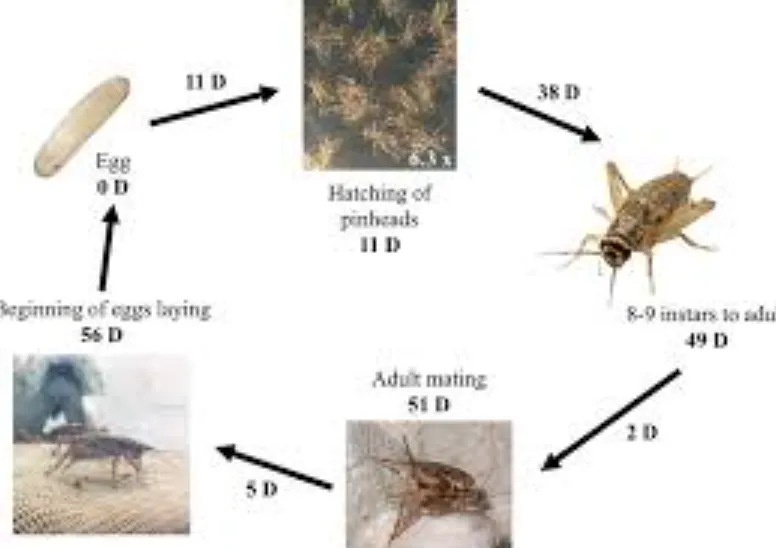
- Egg stage: Cricket eggs may hatch in around one to three weeks in warm, suitable conditions. Cooler conditions can slow development.
- Nymph stage: It often lasts several weeks. Many crickets molt several times before becoming adults.
- Adult stage: Adult crickets commonly live around six to eight weeks, although this can vary.
- Total life cycle: For many common crickets, the full life cycle may take around two to three months. Some field crickets have seasonal cycles that are longer because they overwinter as eggs or nymphs.
- Temperature effect: Warm conditions usually speed up development. Cold weather slows growth and can kill adults in outdoor environments.
- Food effect: Crickets with steady food and water usually grow better and live longer than crickets facing starvation.
- Predator effect: In the wild, many crickets die before old age because birds, reptiles, amphibians, spiders, small mammals, and other insects eat them.
- Moisture effect: Eggs and young nymphs need suitable moisture. Too much dryness can reduce egg survival, while too much wetness can encourage mold.
- Species difference: A house cricket, field cricket, mole cricket, tree cricket, and camel cricket may have different life patterns.
- Captive conditions: In controlled rearing, crickets may survive better because food, temperature, and protection are managed.
The best way to understand cricket lifespan is to view it as a flexible biological process rather than a fixed number. A cricket living in a warm, safe, food-rich place may complete its life cycle faster and more successfully than one living in a dry, exposed, predator-filled habitat.
Life Cycle Of Cricket: Insect Lifespan in the Wild vs. in Captivity
Lifespan In The Wild
In the wild, a cricket’s lifespan is strongly affected by weather and predators. Many eggs never hatch, and many nymphs are eaten before they become adults.
Outdoor crickets also face drought, flooding, soil disturbance, disease, parasites, and food shortages. Because of these risks, wild crickets may not always reach their full possible lifespan.
Lifespan In Captivity
In captivity, crickets often have more stable conditions. They may receive regular food, water, warmth, and shelter.
A controlled environment can help them grow faster and survive longer. This is why crickets are commonly raised as feeder insects for reptiles, amphibians, birds, and fish, as well as for laboratory studies.
Main Difference
The main difference is survival pressure. Wild crickets live in a real ecosystem where predators and weather control their numbers. Captive crickets live in a managed space where humans reduce many risks.
However, poor captive care can shorten their lives. Overcrowding, mold, poor ventilation, dirty containers, and a lack of moisture can quickly harm cricket colonies.
Importance of the Life Cycle of the Cricket Insect In This Ecosystem
Food For Other Animals
Crickets are an important food source for many animals. Birds, frogs, lizards, spiders, bats, small mammals, and predatory insects all eat crickets.
Because crickets reproduce quickly, they provide a steady food supply in many habitats.
Natural Recycling
Crickets help break down organic material. They feed on plant debris, dead insects, and other soft organic matter.
This helps return nutrients to the soil and supports the natural recycling system.
Soil And Plant Connection
By moving through leaf litter and soil surfaces, crickets help mix small organic particles. Their waste can also replenish nutrients in the environment.
Although they may sometimes damage seedlings or crops when populations are high, they also support natural soil processes.
Sound And Biodiversity Indicator
The cricket insect sound is part of a healthy night ecosystem. A place with many natural insect sounds often has suitable vegetation, moisture, and food-web activity.
If crickets disappear from an area, it may suggest habitat disturbance, pesticide pressure, or loss of natural ground cover.
What To Do To Protect Them In Nature And Save The System For The Future
Protect Natural Ground Cover
- Keep some leaf litter, grass edges, and natural soil areas where crickets can hide, feed, and lay eggs.
- Avoid making every outdoor space completely bare or over-cleaned.
Reduce Unnecessary Pesticide Use
- Use pesticides only when truly needed.
- Avoid spraying broad insecticides across gardens, lawns, and field edges without a clear reason.
Support Native Plants
- Native plants provide better shelter and food for insects.
- A mixed garden with grasses, shrubs, and flowering plants can support crickets and other beneficial organisms.
Keep Soil Healthy
- Avoid excessive soil disturbance in natural areas.
- Healthy soil supports eggs, nymphs, plant growth, fungi, and the small organisms crickets depend on.
Reduce Light Pollution
- Crickets can be attracted or disturbed by artificial light.
- Use outdoor lights only when needed, and choose softer, less disruptive lighting near gardens and natural areas.
Fun & Interesting Facts About the Life Cycle of the Cricket Insect
- Male crickets usually make the familiar chirping sound, not females.
- Cricket sound is produced by rubbing the forewings together, not by using the mouth.
- Some cricket songs attract females, while others warn rival males.
- A female cricket uses an ovipositor to place eggs into soil or soft material.
- Young crickets are called nymphs, and they look like smaller adults.
- Crickets grow by molting because their hard outer body cannot stretch like skin.
- Many crickets are more active at night.
- The house cricket insect is often attracted to warmth, light, food scraps, and shelter.
- A close-up photo of a cricket insect can show its wing veins, long antennae, compound eyes, and jumping legs in detail.
- Crickets are part of many food chains and help feed birds, reptiles, amphibians, spiders, and small mammals.
- Some cultures have kept crickets for their songs.
- The chirping rate of some crickets increases when the temperature rises.
Frequently Asked Questions (FAQs)
Q: What is the life cycle of a cricket?
A: The life cycle of the cricket insect includes egg, nymph, and adult stages. For easier study, the nymph stage can be divided into early and late nymph stages.
Q: Does a cricket insect have a larva stage?
A: No. Crickets do not have larval or pupal stages like butterflies or beetles. They go through incomplete metamorphosis.
Q: How many times does a cricket molt?
A: Many crickets molt several times before becoming adults. Some field crickets may molt around eight to ten times, though the number can vary by species and environment.
Q: What does the house cricket insect eat?
A: The house cricket insect eats plant material, food scraps, dead or weakened insects, and sometimes fabrics or paper products if it enters homes.
Q: Why does the cricket’s insect sound louder at night?
A: Many crickets are nocturnal, so they are more active at night. Males call during quiet evening or night hours to attract females and communicate with other crickets.
Final Word
The life cycle of the cricket shows how a small creature can play a large role in nature. From a tiny egg hidden in soil to a jumping nymph and finally a chirping adult, every stage has a purpose.
Crickets may seem ordinary, but they support ecosystems in many ways. They recycle organic matter, feed many predators, help maintain soil activity, and add natural sound to warm evenings. The cricket insect sound is not just background noise; it is part of mating, communication, and survival.
Understanding crickets also helps us respect small insects that often go unnoticed. Whether you are studying a house cricket insect, looking at cricket insect images, or observing a cricket insect close up, you are seeing a living part of a much larger ecological system.
Also Read: life cycle of a honey bee
About the Author