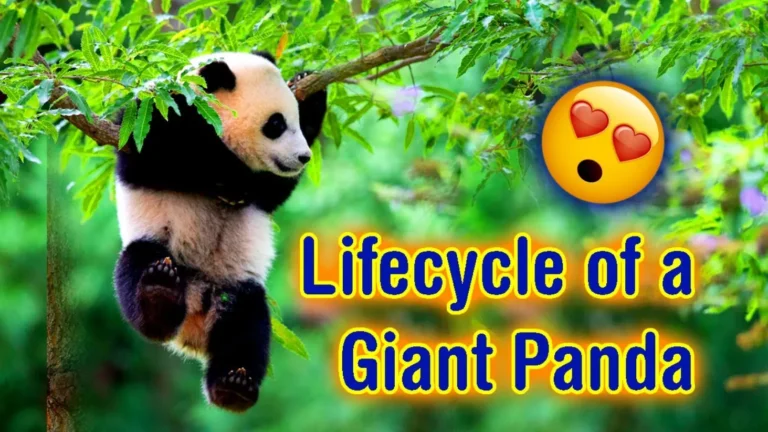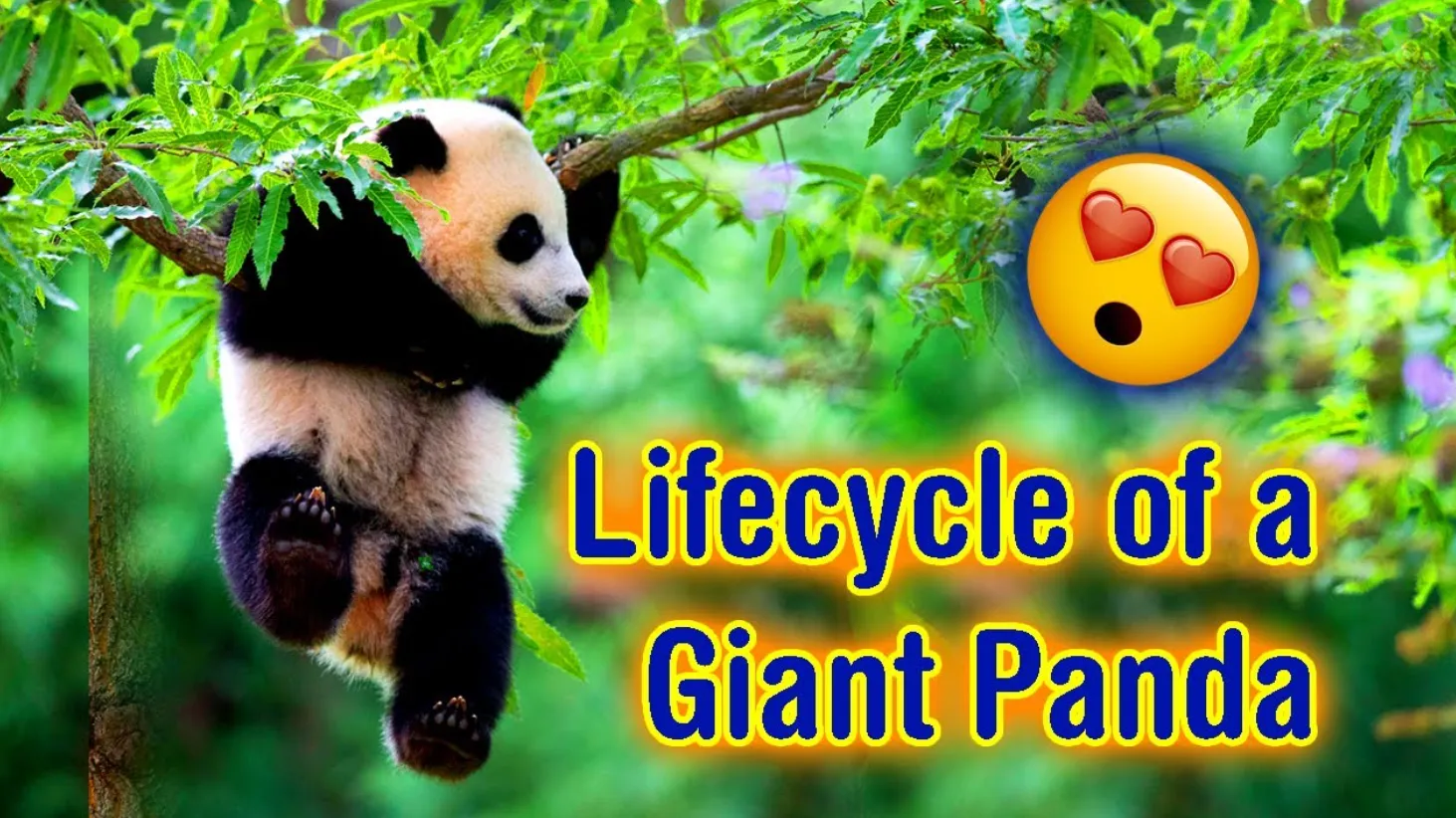
The life cycle of the panda is one of the most fascinating stories in the animal kingdom because this gentle-looking bear begins life as one of the smallest and most helpless mammal babies compared with its mother’s size. The giant panda, scientifically known as Ailuropoda melanoleuca, is native to the mountain forests of central and southwest China. Today, the panda is listed as Vulnerable, with about 1,864 pandas in the wild and several hundred more living in zoos and breeding centers.
A panda’s life is strongly connected to bamboo forests. Although it belongs to the order Carnivora, the panda eats mostly bamboo and spends many hours every day feeding because bamboo gives limited energy. Adult pandas are usually solitary, but they meet during the breeding season. A cub depends completely on its mother for warmth, milk, protection, and survival during the early months of life.
Q: What are the main stages in the life cycle of the panda?
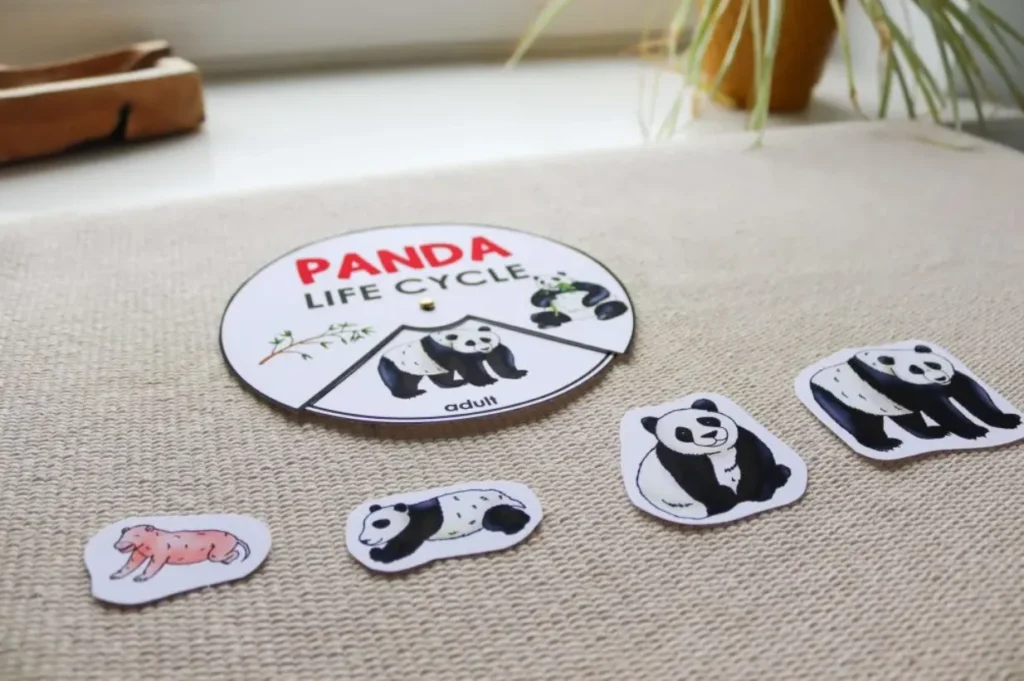
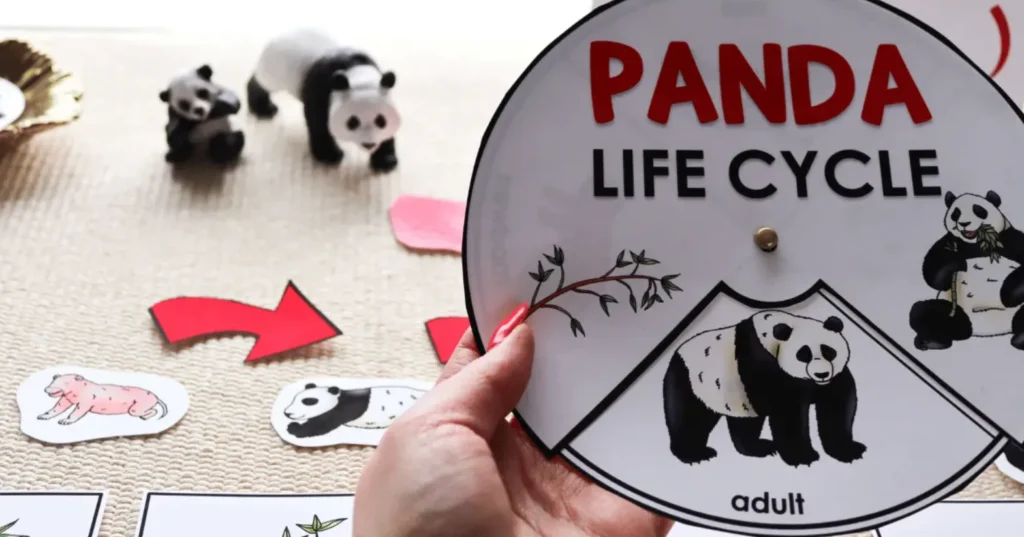
A: The main stages are newborn cub, growing cub, juvenile panda, and adult panda.
Q: How long does a panda cub stay with its mother?
A: A panda cub may stay with its mother for about 1.5 to 3 years, depending on its development and natural conditions.
Q: What is the biggest threat to pandas today?
A: The biggest threat is habitat loss and habitat fragmentation, especially when roads, farming, and development separate bamboo forests.
Quick Life Cycle Table
| Panda Life Stage | Approx. Age | Key Features |
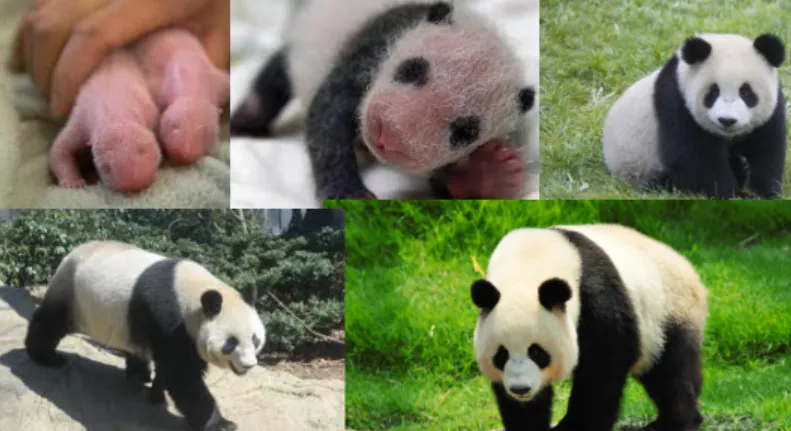
| Newborn Cub | Birth to 2 months | Pink, blind, tiny, helpless, fully dependent on mother |
| Growing Cub | 2 to 12 months | Eyes open, begins crawling, walking, playing, and tasting bamboo |
| Juvenile Panda | 1 to 3 years | Learns climbing, feeding, movement, and survival skills |
| Young Adult | 4 to 7 years | Reaches breeding maturity and begins independent adult life |
| Mature Adult | 7+ years | Solitary lifestyle, breeding, bamboo feeding, and territory marking |
| Old Panda | 15+ years in the wild | Slower movement, reduced breeding, and higher survival challenges |
Important Things That You Need To Know
Before studying the life cycle of the panda, it is important to understand that the word panda usually refers to the giant panda, not the red panda. The giant panda is a true bear and belongs to the family Ursidae. Its scientific name, Ailuropoda melanoleuca, means a black-and-white animal with a cat-like foot reference, matching its famous coat pattern.
The life cycle of the panda is slow compared with that of many mammals. Female pandas do not reproduce often because they ovulate only once a year, and the fertile period lasts only a few days. This makes every successful birth extremely important for the survival of the species. A mother panda usually raises one cub, even when twins are born, because the cubs require intense care.
A panda depends on bamboo at almost every stage of its life. Bamboo provides food, shelter, and pathways for movement within the forest. However, bamboo is low in nutrition, so adult pandas must eat large amounts daily. WWF notes that pandas may eat around 26 to 84 pounds of bamboo per day, depending on the bamboo part eaten.
The survival of the panda also depends on healthy mountain forests. Protecting pandas means protecting many other species that live in the same habitat, including golden monkeys, takins, pheasants, and other forest wildlife. In this way, the life cycle of the panda is not only about one animal; it is also about the health of an entire forest ecosystem.
The History of Their Scientific Naming, Evolution, and Origin
Scientific Naming of the Panda
The scientific name of the giant panda is Ailuropoda melanoleuca. The species was formally described by Armand David in 1869, and modern taxonomy places it in the genus Ailuropoda. GBIF lists the species as Ailuropoda melanoleuca David, 1869, confirming its accepted scientific classification.
Evolutionary Background
For many years, scientists debated whether the panda was closer to bears or raccoon-like animals because it shares some unusual features with both. Modern molecular studies support that the giant panda is a true bear in the family Ursidae. Its body structure, skull, teeth, and digestive system show its bear ancestry, even though its diet is mostly bamboo.
Origin and Natural Range
The panda originated in China and once lived across a wider range of lowland areas. Over time, farming, forest clearance, and human settlement pushed pandas into the mountain forests of Sichuan, Shaanxi, and Gansu. Smithsonian notes that pandas now live mainly in a few mountain ranges in south-central China, where dense bamboo forests support their survival.
Their Reproductive Process, Giving Birth, And Rising Their Children
Breeding Season and Mating
The reproductive process of the panda is very short and delicate. Female pandas usually come into heat only once each year, generally in spring. Their fertile window may last only two to three days, which makes successful mating difficult in both the wild and captivity.
During this time, males and females communicate through scent marks and vocal calls. Since pandas are normally solitary animals, scent is especially important for bringing them together during the breeding season.
Pregnancy and Birth
After mating, the female gives birth after a gestation period of about 90 to 180 days. A newborn panda cub is extremely small, usually pink, blind, and helpless. It may weigh only a few ounces and is often described as being about the size of a stick of butter.
Although twins can be born, a mother panda in the wild usually raises only one cub successfully because panda babies require constant warmth, milk, cleaning, and protection.
Raising the Cub
The mother panda raises the cub alone. Male pandas do not help with cub care. In the first days after birth, the mother may stay inside the den and avoid leaving even for food or water. The San Diego Zoo notes that panda mothers carefully cradle their tiny cubs and keep them close to the chest.
As the cub grows, it begins developing black markings, opens its eyes, crawls, walks, plays, and later starts eating bamboo. Nursing may continue for many months, while social dependence may last up to two years or more.
Stages of the Life Cycle of the Panda
Stage 1: Newborn Cub
The first stage in the life cycle of the panda is the newborn stage. A panda cub is born tiny, blind, pink, and almost hairless. It cannot regulate its body temperature properly, so it depends entirely on the mother’s warmth and care.
This stage is very risky because the cub is fragile and unable to move away from danger. The mother must constantly hold, clean, nurse, and protect it. During this early period, survival depends more on maternal care than on the cub’s own strength.
Stage 2: Growing Cub
The growing cub stage begins when the panda starts developing more visible black-and-white markings. Between one and two weeks, the black areas begin to appear. By around two months, the cub’s eyes open, and it starts crawling. Teeth appear later, and the cub becomes more active.
At around three to five months, the cub can walk more confidently. It begins playing with its mother, climbing small surfaces, and exploring its surroundings. At five to six months, it may start trying bamboo, although milk remains important.
Stage 3: Juvenile Panda
The juvenile stage is a period of learning. The young panda gradually becomes stronger and more independent. It learns to climb trees, identify edible bamboo, navigate forest terrain, and avoid potential threats.
The cub may stay with its mother from about 1.5 to 3 years. This long care period helps it develop survival skills before living on its own. Since adult pandas are solitary, this stage prepares the young panda for an independent life.
Stage 4: Adult Panda
The adult stage begins when the panda becomes fully independent and later reaches breeding maturity. Giant pandas usually reach breeding maturity between 4 and 7 years of age.
Adult pandas spend most of their time feeding, resting, scent-marking, and moving through bamboo forests. Their adult life is shaped by bamboo availability, safe habitat, and seasonal breeding opportunities. This final stage is essential because it continues the panda’s life cycle.
Their Main Diet, Food Sources, And Collection Process Explained
The panda’s main diet is bamboo. Even though pandas are classified among carnivores, their daily food habits are almost completely plant-based. Bamboo shoots, leaves, and stems are the most important food sources. GBIF notes that bamboo shoots and leaves make up more than 99% of the panda’s diet.
Pandas collect food by moving slowly through bamboo forests and selecting parts of the plant based on season and nutritional needs. Tender bamboo shoots are often preferred when available because they are easier to chew and richer in nutrients.
Important diet points include:
- Bamboo leaves: Often eaten in large amounts and available through much of the year.
- Bamboo shoots: Softer, seasonal, and highly valuable for energy.
- Bamboo stems: Tougher and more fibrous, requiring strong jaws and molars.
- Occasional foods: Wild grasses, fruits, insects, eggs, small animals, or carrion may be eaten rarely.
- Captive diet support: Zoos may provide bamboo along with special biscuits, fruits, or nutritional supplements.
A panda uses its famous “pseudo-thumb,” which is actually an enlarged wrist bone, to hold bamboo while eating. This special adaptation helps the panda grip stems and strip leaves efficiently. Smithsonian explains that pandas use powerful jaws, strong teeth, and their wrist-bone thumb to crush and handle bamboo.
Because bamboo is low in calories, pandas must eat for many hours each day. Their feeding process is slow, repetitive, and energy-focused. In the wild, a panda must live where several bamboo species are available, because bamboo flowering and die-off can reduce food supply.
How Long Does A Life Cycle of the Panda Live
The lifespan of a panda depends on habitat quality, food availability, disease, genetics, and whether it lives in the wild or under human care. In general, wild pandas live shorter lives than pandas in captivity because they face more natural risks.
- Wild pandas usually live about 15 to 20 years. The Smithsonian states that scientists estimate the wild panda’s lifespan to be around this range.
- Captive pandas may live around 30 years or more. In human care, pandas receive regular food, medical treatment, monitoring, and protection from predators or starvation.
- Some zoo pandas have lived beyond 30 years. Chinese scientists have reported zoo pandas reaching about 35 years, while some exceptional individuals have lived even longer.
- The newborn stage has the highest risk. A panda cub is tiny, blind, and completely dependent on its mother. Poor maternal care, illness, cold, or weakness can be fatal during this stage.
- Juvenile pandas still face danger. Young pandas may be vulnerable to predators such as yellow-throated martens, dholes, or other forest animals, especially before they become large and strong. San Diego Zoo explains that cubs and juveniles can be preyed upon in the wild.
- Adult pandas are safer but not risk-free. Adults have fewer natural predators due to their size, but they still face habitat loss, bamboo shortages, disease, injury, and climate-related changes.
- Reproductive lifespan matters for population recovery. Female pandas reproduce slowly. Because a wild female may raise only one cub every two or three years, population growth is naturally slow.
- Habitat quality affects lifespan. A panda living in a large, connected bamboo forest has better chances of finding food, mates, and safe movement routes.
- Fragmented forests reduce survival. Roads, railways, and development can isolate panda groups, making it harder for them to find mates and new bamboo areas.
- Conservation improves survival chances. Protected reserves, habitat corridors, anti-poaching laws, and breeding research all help pandas live longer and reproduce more successfully.
Life Cycle of the Panda Lifespan in the Wild vs. in Captivity
Lifespan in the Wild
In the wild, the panda’s lifespan is usually around 15 to 20 years. Wild pandas must search for bamboo, move across mountain slopes, avoid danger, and survive seasonal changes. Natural conditions, including weather, food availability, disease, injury, and habitat quality, shape their lives.
A wild panda has freedom, natural behavior, and access to its native ecosystem. However, if bamboo forests become fragmented, the panda may struggle to find enough food or suitable mates.
Lifespan in Captivity
In captivity, pandas may live about 30 years because they receive regular bamboo, veterinary care, safe shelter, and health monitoring. Human care also helps breeding programs understand panda pregnancy, cub growth, and genetic diversity.
However, captivity cannot replace healthy wild forests. Zoos and breeding centers are most valuable when they support conservation science, public education, and carefully managed breeding.
Main Difference
The biggest difference is risk level. Wild pandas face natural and human-caused threats, while captive pandas receive protection. Still, the future of the species depends mainly on protecting wild bamboo habitats, not only increasing zoo populations.
Importance of the Life Cycle of the Panda In This Ecosystem
Panda as an Umbrella Species
The panda is often called an umbrella species. This means that protecting panda habitat also protects many other animals, plants, insects, fungi, and microorganisms living in the same forest. WWF explains that panda habitat supports rich biodiversity, including golden monkeys, takins, multicolored pheasants, and crested ibis.
Role in Forest Health
Pandas move through bamboo forests while feeding, resting, and scent-marking. Their presence reflects the health of the forest. If pandas are surviving well, it often means that bamboo, water sources, tree cover, and mountain ecosystems are also in better condition.
Value for Conservation Awareness
The giant panda is one of the world’s most recognized conservation symbols. Because people love pandas, they often become interested in protecting forests, endangered species, and wildlife habitats.
Economic and Community Value
Panda conservation can support local communities through responsible ecotourism, conservation jobs, research, and environmental education. When managed properly, protecting pandas can help both wildlife and people.
What To Do To Protect Them In Nature And Save The System For The Future
Protect Bamboo Forests
- Save and restore bamboo forests in panda habitats.
- Prevent unnecessary deforestation, illegal logging, and habitat destruction.
- Maintain forest quality so pandas can find food year-round.
Build Safe Habitat Corridors
- Connect separated panda populations with protected forest corridors.
- Reduce the barriers posed by roads, railways, and human development.
- Help pandas move safely to find mates and new bamboo sources.
Support Scientific Conservation
- Use genetic studies, field monitoring, camera traps, and habitat mapping.
- Improve breeding programs without ignoring wild habitat protection.
- Track panda health, cub survival, and population changes.
Reduce Human-Wildlife Conflict
- Work with local communities to create sustainable livelihoods.
- Support eco-friendly farming, forest management, and conservation education.
- Make panda protection beneficial for people living near panda habitats.
Fight Climate and Habitat Risks
- Protect high-altitude and low-altitude bamboo zones.
- Plan for bamboo shifts caused by climate change.
- Avoid poorly planned infrastructure inside panda landscapes.
Fun & Interesting Facts About the Life Cycle of the Panda
- Panda cubs are born extremely tiny compared with their mothers, making them one of the smallest newborn placental mammals relative to maternal size.
- A newborn panda is pink, blind, and helpless, and it does not look like the black-and-white adult panda at birth.
- The black markings appear later, usually within the first couple of weeks after birth.
- Pandas have a pseudo-thumb, which is an enlarged wrist bone used to hold bamboo.
- Pandas spend many hours eating because bamboo is low in energy and difficult to digest.
- The panda is a bear, even though its bamboo diet makes it look more like a peaceful herbivore.
- Female pandas are fertile for only a very short time each year, making reproduction naturally difficult.
- Panda mothers raise cubs alone, while males do not take part in parenting.
- Young pandas are good climbers, and cubs often climb trees for safety.
- Protecting pandas protects many other species, because panda forests are rich in biodiversity.
Frequently Asked Questions (FAQs)
Q: What is the life cycle of the panda?
A: The life cycle of the panda includes the newborn cub stage, growing cub stage, juvenile stage, and adult stage. A panda begins life as a tiny, helpless cub and slowly develops into an independent bamboo-eating adult.
Q: How long does a panda cub depend on its mother?
A: A panda cub may depend on its mother for about 1.5 to 3 years. During this time, it learns feeding, climbing, movement, and survival skills.
Q: What do pandas eat during their life cycle?
A: Pandas eat mostly bamboo, including shoots, leaves, and stems. Cubs drink their mother’s milk first, and later begin tasting bamboo at around 5 to 6 months.
Q: When do pandas become adults?
A: Pandas usually reach breeding maturity between 4 and 7 years. At this stage, they can reproduce and live independently in the forest.
Q: Are pandas still endangered?
A: The giant panda is no longer listed as Endangered by the IUCN; it is currently listed as Vulnerable. However, pandas still need protection because habitat loss and fragmentation remain serious threats.
Final Word
The panda’s life cycle is a powerful example of how delicate and interconnected nature can be. From a tiny blind cub to a strong bamboo-eating adult, every stage of a panda’s life depends on patient maternal care, healthy bamboo forests, safe habitat, and successful conservation. Although panda numbers have improved, the species remains vulnerable and cannot survive without long-term protection.
Saving the panda means more than saving one beautiful animal. It means protecting mountain forests, bamboo ecosystems, water sources, and many other species that share these habitats. With stronger conservation planning, community support, habitat corridors, and responsible environmental action, future generations can continue to see pandas living safely in nature. The panda’s life cycle reminds us that even slow-breeding, fragile species can recover when humans choose protection over destruction.
Also Read: life cycle of cricket insect
About the Author