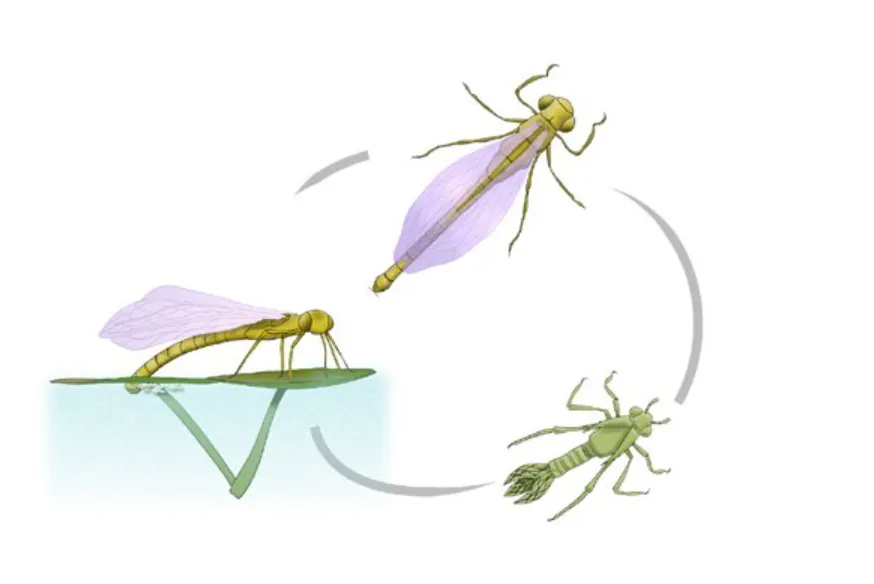
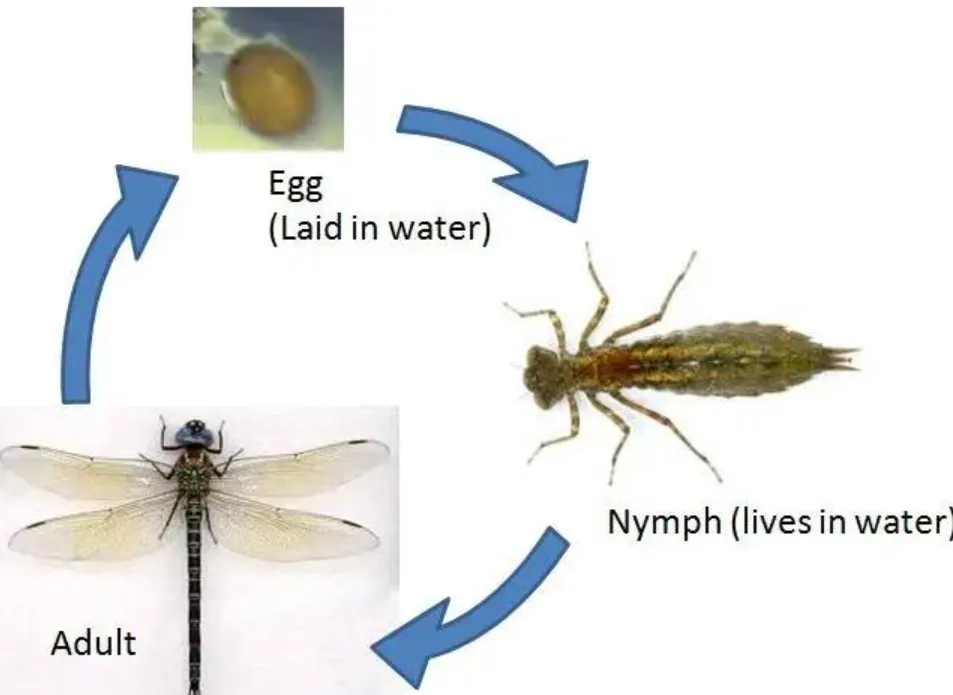
The life cycle of a dragonfly is one of the most interesting transformations in the insect world. A dragonfly begins life in or near freshwater as an egg, grows as an underwater dragonfly larva or nymph, emerges from the water, and finally becomes a winged adult.
Unlike butterflies, dragonflies do not pass through a pupal stage. Their development is called incomplete metamorphosis, which means they change gradually from egg to nymph to adult. Most of their life is spent underwater, where the young nymph hunts small aquatic animals before climbing out for its final molt.
Adult dragonflies are powerful aerial hunters. Their large eyes, fast flight, and strong legs help them catch mosquitoes, flies, midges, and other airborne insects. They are often seen around ponds, lakes, wetlands, rivers, marshes, and slow-moving streams.
The life cycle of a dragonfly is also important for nature. Because they need clean freshwater to breed, dragonflies can act as useful signs of wetland health. Their presence often suggests that a habitat has enough water, prey, vegetation, and shelter to support a balanced ecosystem.
Quick Answers: Most Common Questions
Q: What are the main stages in the life cycle of a dragonfly?
A: The main biological stages are egg, aquatic nymph or larva, and adult dragonfly. For easier understanding, many guides also separate emergence as a fourth visible stage.
Q: How long does a dragonfly live?
A: A dragonfly may live from several months to a few years in total, depending on species and climate. Most of that time is spent as an underwater nymph, while the adult stage often lasts only a few weeks.
Q: Do dragonflies help control mosquitoes?
A: Yes. Both dragonfly larvae and adult dragonflies eat mosquitoes and other small insects. They are not a complete mosquito-control solution, but they are valuable natural predators in healthy wetland systems.
Quick Life Cycle Table
| Stage | Mobile-Friendly Summary |
| Egg | Laid in water, aquatic plants, mud, or damp surfaces near freshwater. Hatching time depends on species and temperature. |
| Dragonfly Larvae / Nymph | Lives underwater, breathes through internal gills, hunts aquatic insects, mosquito larvae, tadpoles, and tiny fish. This is usually the longest stage. |
| Emergence / Final Molt | Mature nymph climbs out of water, attaches to a plant, rock, or stem, and the adult dragonfly pulls out of the old skin. |
| Adult Dragonfly | Flies hunt insects, mature, find a mate, lay eggs, and continue the cycle. Adult life is usually short but highly active. |
Important Things That You Need To Know
When people search for the life cycle of a dragonfly, they often also search related terms such as dragonfly meaning, dragonfly spiritual meaning, dragonfly tattoo, dragonfly drawing, dragonfly wellness, and dragonfly larvae. These phrases show that dragonflies are not only important in science; they also have cultural, artistic, and symbolic value.
The scientific side is clear: a dragonfly is a predatory insect in the order Odonata, suborder Anisoptera. Its early stage, called a dragonfly larva or nymph, lives underwater and plays a major role in freshwater food chains.
The symbolic side is more cultural. The dragonfly is often associated with change, adaptability, clarity, and transformation because it moves from water to air throughout its life. The spiritual meaning of the dragonfly is commonly associated with renewal, lightness, emotional growth, and self-awareness. These meanings are symbolic, not scientific facts, but they explain why dragonflies appear in art, jewelry, meditation themes, and nature-based wellness content.
A dragonfly tattoo often represents personal change, freedom, survival, beauty, or a new beginning. A dragonfly drawing is also popular because the insect has a simple but elegant body shape, transparent wings, and balanced symmetry.
The phrase dragonfly wellness is usually used in a nature-inspired sense. Watching dragonflies near clean water can support relaxation, mindfulness, and appreciation for wild habitats. However, dragonflies themselves should be respected as living wildlife, not captured or disturbed for decoration.
The History of Their Scientific Naming, Evolution, and Origin
Scientific Naming of Dragonflies
Dragonflies belong to the insect order Odonata, a name connected with strong, toothed mandibles. True dragonflies are placed in the suborder Anisoptera, which refers to their unequal wings. In most dragonflies, the hindwings are broader at the base than the forewings.
Classification and Identity
The word dragonfly is commonly used for true dragonflies, but many people also use it loosely to refer to both dragonflies and damselflies. Scientifically, true dragonflies are different from damselflies because they usually have stronger bodies, larger eyes, and wings held open or outward when resting.
Evolution and Ancient Origin
Dragonflies are part of an ancient insect lineage. Their ancestors appeared long before humans, birds, and flowering plants became dominant. Fossil relatives of dragonflies show that dragonfly-like insects were already flying in prehistoric forests millions of years ago.
Why Their Origin Matters
Their ancient design has remained successful because it works. Large eyes, strong wings, predatory jaws, and aquatic young make dragonflies efficient hunters in two worlds: water and air. This is why the life cycle of a dragonfly is often studied in biology, ecology, and freshwater conservation.
Their Reproductive Process, Giving Birth And Rising Their Children
Mating Behavior
Dragonflies do not give birth to live young. They reproduce by laying eggs. The process begins when a male dragonfly finds and holds a female using special claspers at the end of his abdomen. This can lead to the well-known “wheel” or heart-shaped mating position seen in many dragonflies and damselflies.
Egg-Laying Process
After mating, the female lays eggs in or near freshwater. Depending on the species, she may place eggs inside aquatic plants, drop them directly into water, tap the water surface with her abdomen, or lay them in damp mud.
No Parenting Like Mammals
Dragonflies do not raise their children in the way mammals or birds do. There is no feeding of young, nest guarding, or family care after hatching. However, the female’s choice of egg-laying site is extremely important. Clean water, aquatic plants, oxygen, and shelter increase the chance that the young will survive.
Male Guarding Behavior
In some species, males guard females during egg laying. This may happen while the pair remains attached or while the male flies nearby. The purpose is not parental care, but mate protection. It helps prevent other males from mating with the female before she lays fertilized eggs.
From Egg to Independent Hunter
Once the eggs hatch, the young dragonfly larvae are independent. They begin hunting almost immediately and live as underwater predators. Their survival depends on water quality, temperature, prey availability, and protection from fish, birds, frogs, and larger insects.
Stages of the Life Cycle of a Dragonfly
Stage 1: Egg
The first stage in the life cycle of a dragonfly is the egg. Female dragonflies usually lay eggs in freshwater habitats such as ponds, lakes, marshes, ditches, wetlands, or slow streams. Some species lay eggs directly in water, while others insert them into plant stems or soft aquatic vegetation.
Eggs may hatch quickly in warm conditions, but in colder climates, some eggs remain dormant until conditions improve. This delay helps young nymphs hatch when food and temperature are suitable.
Stage 2: Aquatic Nymph or Dragonfly Larvae
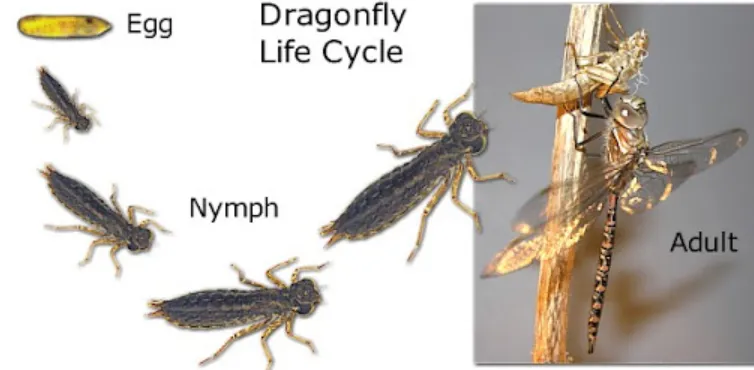
The second stage is the dragonfly larva, also called a nymph or naiad. This is the longest and most hidden part of the dragonfly’s life. The nymph lives underwater and looks very different from the adult.
It has no working wings, but it has a strong body, powerful jaws, and a special extendable lower lip used to grab prey. During this stage, it eats mosquito larvae, aquatic insects, worms, tadpoles, tiny fish, and sometimes smaller dragonfly nymphs.
As it grows, the nymph molts many times. Each molt allows the body to expand and develop closer to adulthood.
Stage 3: Emergence and Final Molt
When the nymph is fully grown, it leaves the water. It climbs onto a plant stem, a rock, a reed, or another stable surface. Then the outer skin splits open, and the adult dragonfly slowly pulls itself out.
This is a delicate stage. The new adult is soft, pale, and unable to fly at first. Its wings must expand, dry, and harden before it can escape predators. The empty skin left behind is called an exuvia.
Stage 4: Adult Dragonfly
The final stage is the adult dragonfly. At first, the adult is called a teneral. It is weak, lightly colored, and still developing full strength. After a short period, it becomes a skilled hunter and returns to water to mate.
Adult dragonflies feed, defend territory, find mates, and lay eggs. This stage is usually the shortest, but it is the most visible and familiar part of the dragonfly life cycle.
Their Main Diet, Food Sources, And Collection Process Explained
Diet of Dragonfly Larvae
Dragonfly larvae are underwater predators. They feed on living prey rather than plants. Their diet often includes mosquito, midge, and aquatic worm larvae, small crustaceans, tadpoles, small fish, and other insect larvae.
They hunt by waiting silently and striking quickly. Their lower lip, called a labium, works like a folding trap. When prey comes close, the nymph extends this mouthpart and pulls the prey back into its jaws.
Diet of Adult Dragonflies
Adult dragonflies eat flying insects. Their common food sources include mosquitoes, flies, gnats, midges, moths, small butterflies, and sometimes other dragonflies. They are active hunters and usually catch prey in the air.
How They Collect Food
Dragonflies do not collect food like bees collect nectar. They hunt. Adults use their large compound eyes to detect movement, then fly quickly toward prey. Their legs form a basket-like shape that helps trap insects during flight.
Some species are “perchers,” meaning they rest on a stem and fly out when prey passes. Others are “fliers,” patrolling open spaces and catching insects continuously.
Why Their Diet Matters
Their diet makes dragonflies important natural predators of pests. They help reduce the number of small flying insects around freshwater habitats. However, they are part of a balanced system, not a single solution for pest control. Healthy wetlands support dragonflies, and dragonflies support healthy wetlands.
How Long Does A Dragonfly Live
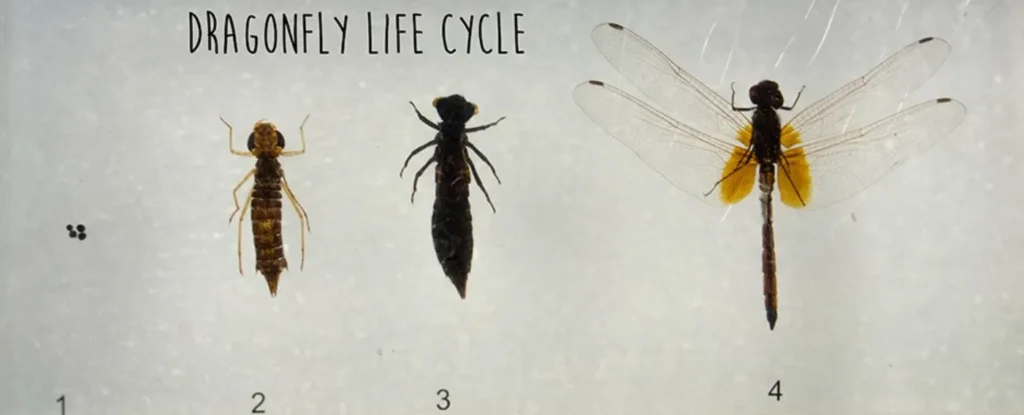
The lifespan of a dragonfly depends on species, climate, habitat quality, season, food supply, and predator pressure. Many people think dragonflies live only for a day, but that is not accurate. The adult stage may be short, but the full life cycle can be much longer.
- Egg stage: Dragonfly eggs may hatch in days or weeks under warm conditions. In some species, eggs pause development and survive through colder or drier seasons.
- Nymph stage: This is usually the longest stage. Many dragonfly larvae live underwater for several months to one or more years. In colder regions or larger species, the nymph stage can last multiple years.
- Emergence stage: The final molt from nymph to adult may take a few hours, but it is one of the most dangerous parts of the life cycle. The dragonfly is soft, vulnerable, and unable to fly until its body hardens.
- Teneral stage: Newly emerged adults need time to strengthen, gain color, and develop full flying ability. During this stage, they often move away from water to feed and mature.
- Adult stage: Many adult dragonflies live for a few weeks. Some may survive longer when the weather is favorable, food is abundant, and predators are avoided.
- Total lifespan: In many species, the complete life span may range from a few months to several years. Most of this time is spent underwater as a nymph.
- Climate effect: Dragonflies in warmer regions may develop faster, while those in colder areas often grow more slowly.
- Predator effect: Fish, frogs, birds, spiders, and larger insects can shorten dragonfly life at any stage.
- Habitat effect: Clean water, aquatic plants, and healthy prey populations increase survival chances.
In simple terms, the adult dragonfly is only the final chapter. The real story of a dragonfly’s life cycle unfolds underwater, where the nymph grows, hunts, molts, and prepares for life in the air.
Life Cycle of a Dragonfly Lifespan in the Wild vs. in Captivity
Lifespan in the Wild
In the wild, dragonflies live in natural freshwater systems. Their survival depends on clean water, stable vegetation, good hunting areas, and safe emergence sites. Wild dragonflies face many risks, including fish, birds, frogs, spiders, storms, drought, pollution, and habitat loss.
Even with these risks, the wild is where dragonflies belong. Their behaviors, mating, hunting, migration, and egg-laying patterns are adapted to natural environments.
Lifespan in Captivity
Dragonflies are not easy insects to keep in captivity. Their aquatic nymphs need specific water conditions, oxygen, prey, space, and hiding areas. Adults need room to fly and hunt, which is difficult to provide in small containers.
Captive dragonflies often live shorter lives if their needs are not met. They may become stressed, injured, or unable to feed naturally.
Which Is Better?
For conservation and ethical reasons, dragonflies are best left in nature. Observing them in gardens, wetlands, ponds, and parks is better than capturing them. A healthy outdoor habitat gives them the best chance to complete their natural life cycle.
Importance of the Life Cycle of a Dragonfly In This Ecosystem
Natural Pest Control
Dragonflies are important predators. Dragonfly larvae eat mosquito larvae and other aquatic insects, while adults hunt mosquitoes, flies, gnats, and midges. This helps keep insect populations more balanced.
Freshwater Food Web Support
Dragonflies are both predators and prey. Fish, frogs, birds, and larger aquatic animals eat nymphs. Birds, spiders, frogs, and other predators eat adults. This makes them an important link between aquatic and land-based food chains.
Indicators of Wetland Health
Because dragonflies depend on freshwater habitats, their presence can suggest that an ecosystem has suitable water quality, vegetation, oxygen, and prey. A sudden decline may signal pollution, habitat damage, or water imbalance.
Nutrient Transfer Between Water and Land
The life cycle of a dragonfly connects water and air. Nymphs grow underwater, then emerge as flying adults. This movement transfers energy from aquatic habitats into terrestrial food webs.
Biodiversity Value
Dragonflies add beauty, movement, and ecological function to wetlands. Protecting them also protects many other species that share the same habitat, including frogs, fish, aquatic plants, birds, and beneficial insects.
What To Do To Protect Them In Nature And Save The System For The Future
Protect Freshwater Habitats
- Keep ponds, lakes, marshes, streams, and wetlands clean.
- Avoid dumping chemicals, oils, paint, or waste into drains or waterways.
- Support local wetland restoration projects.
Reduce Pesticide Use
- Avoid spraying insecticides near ponds, gardens, and streams.
- Use natural pest-control methods when possible.
- Remember that pesticides can kill dragonflies and their prey.
Grow Native Plants Near Water
- Plant native grasses, reeds, sedges, and flowering plants around ponds.
- Provide stems where nymphs can climb out during emergence.
- Maintain shallow edges and natural shelter.
Avoid Capturing Dragonflies
- Watch and photograph dragonflies instead of catching them.
- Teach children to observe gently.
- Leave exuviae, eggs, larvae, and adults undisturbed.
Support Clean Water Conservation
- Reduce plastic waste.
- Join local stream-cleaning events.
- Protect small ponds and seasonal wetlands, not only large lakes and rivers.
These steps protect not only dragonflies but also the wider freshwater system that supports fish, frogs, birds, insects, and people.
Fun & Interesting Facts About the Life Cycle of a Dragonfly
- Dragonflies are ancient insects. Their relatives were flying long before many modern animals appeared.
- Most of their lives are underwater. The adult flying stage is often much shorter than the nymph stage.
- Dragonfly larvae are fierce hunters. They can catch mosquito larvae, tadpoles, and small fish.
- They do not have a pupal stage. Unlike butterflies, dragonflies develop through incomplete metamorphosis.
- Their eyes are huge. Adult dragonflies have large compound eyes that help them detect fast movement.
- They can fly with great control. Many dragonflies can hover, turn sharply, fly backward, and change direction quickly.
- The empty nymph skin is called an exuvia. Finding one near water is evidence that a dragonfly successfully emerged.
- A dragonfly tattoo often symbolizes transformation. This symbolic meaning stems from the insect’s transition from a water-dwelling nymph to a flying adult.
- Dragonfly drawing is popular in nature art. Their wings, body symmetry, and delicate shape make them interesting subjects.
- Dragonflies are useful but not magical mosquito control. They help reduce insects, but they work best as part of a healthy ecosystem.
Frequently Asked Questions (FAQs)
Q: What is the life cycle of a dragonfly?
A: The life cycle of a dragonfly includes egg, aquatic nymph or larva, emergence, and adult life. Scientifically, the three main stages are egg, nymph, and adult, with emergence often explained separately.
Q: What do dragonfly larvae eat?
A: Dragonfly larvae eat mosquito larvae, aquatic insects, worms, tadpoles, small fish, and sometimes other dragonfly nymphs. They are active underwater predators.
Q: How long do dragonflies stay as nymphs?
A: The nymph stage can last from several months to several years, depending on species, climate, food, and water conditions.
Q: What is the dragonfly’s meaning in culture?
A: Dragonfly’s meaning is often linked with transformation, adaptability, freedom, and personal growth. These are symbolic meanings based on the dragonfly’s change from water to air.
Q: Are dragonflies good for gardens and ponds?
A: Yes. Dragonflies are beneficial predators and signs of a more natural habitat. A pond with native plants, clean water, and no pesticides can support dragonflies and many other helpful species.
Final Word
The life cycle of a dragonfly is a powerful example of transformation, survival, and ecological balance. From a tiny egg to a fierce underwater nymph and finally to a fast, winged hunter, every stage has a purpose.
Dragonflies are more than beautiful insects flying over ponds. They help control small insect populations, support freshwater food webs, and reveal the health of wetlands. Their presence reminds us that clean water, native plants, and balanced ecosystems are deeply connected.
Understanding the life cycle also gives deeper meaning to popular ideas such as dragonfly spiritual meaning, dragonfly tattoo symbolism, and nature-based dragonfly wellness themes. The real beauty of a dragonfly begins with biology and expands into culture, art, and conservation.
Protecting dragonflies means protecting the water systems they depend on. When we save wetlands, reduce pollution, and respect wildlife, we help secure the future of dragonflies and the ecosystems they represent.
Also Read: life cycle of a angiosperm
About the Author