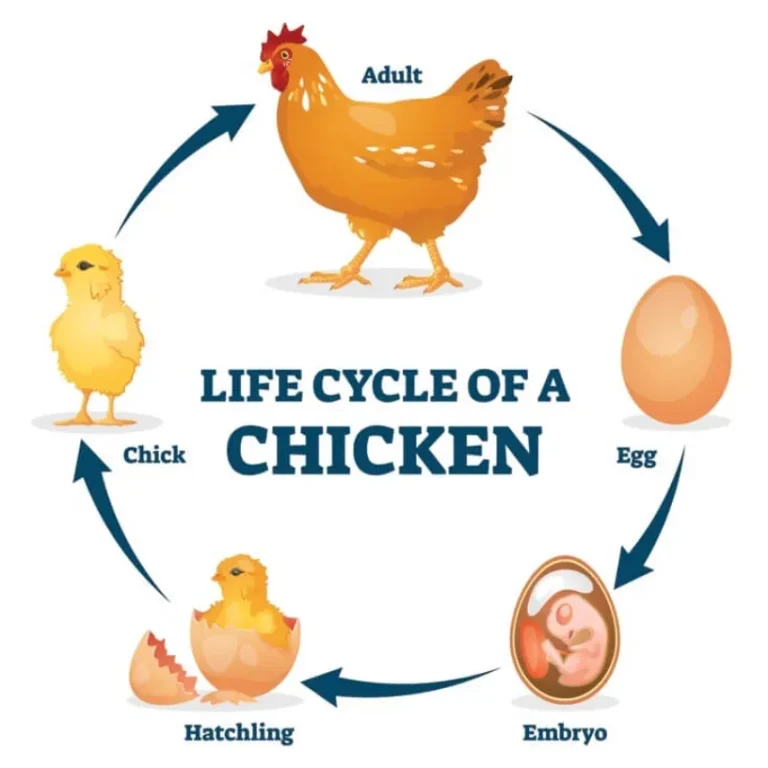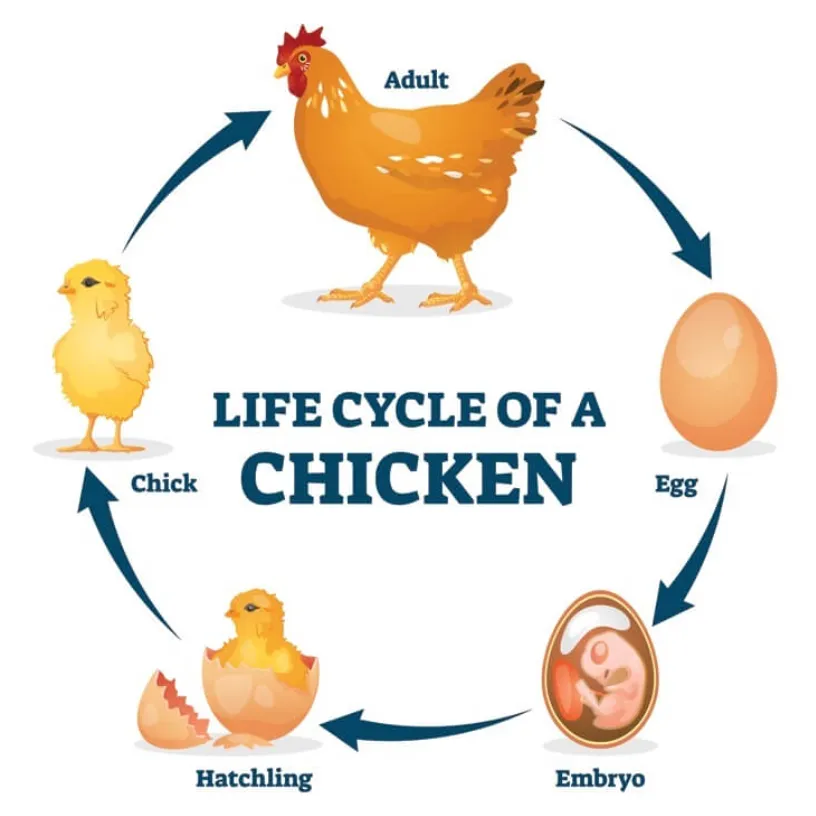
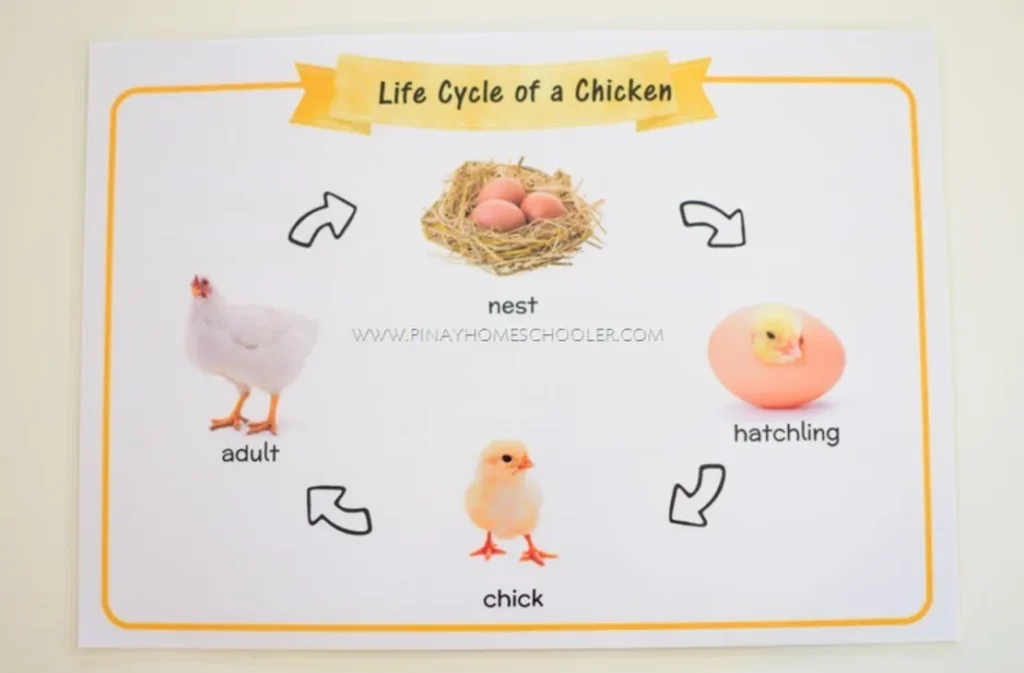
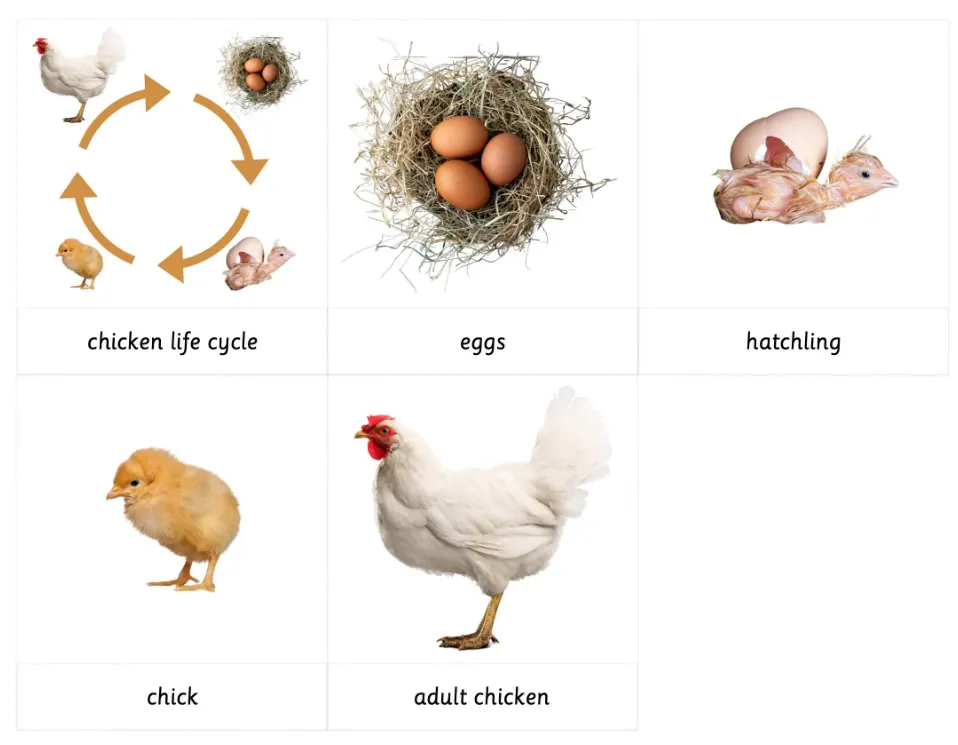
The chicken’s life cycle is among the most familiar and scientifically important in the animal world. A chicken begins life inside a fertilized egg, develops as an embryo, hatches as a chick, grows into a juvenile bird, and finally becomes an adult hen or rooster capable of reproduction.
The domestic chicken is scientifically known as Gallus gallus domesticus. It is closely related to the red junglefowl, a wild bird native to South and Southeast Asia. Today, chickens are found almost everywhere because humans have raised them for eggs, meat, farming, pest control, and backyard companionship.
A normal chicken egg takes about 20 to 21 days to hatch when it is properly incubated. After hatching, chicks grow quickly, develop feathers, learn to forage, and gradually become independent. Chickens are also highly social birds. They live in groups, communicate through different sounds, recognize flock members, and follow a social order often called the pecking order.
The life cycle of the chicken is important for students, farmers, pet keepers, and nature lovers because it explains how chickens grow, reproduce, eat, survive, and support human life and local ecosystems. FAO notes that chickens are among the most widely raised poultry species globally, with a very large population and major importance in food systems.
Q: How many stages are in the life cycle of the chicken?
A: The chicken life cycle is commonly divided into four main stages: egg, chick, juvenile, and adult chicken.
Q: How long does it take for a chicken egg to hatch?
A: A fertilized chicken egg usually hatches in about 20 to 21 days under proper incubation conditions.
Q: What is the scientific name of the chicken?
A: The scientific name of the domestic chicken is usually written as Gallus gallus domesticus, while some taxonomic databases also list Gallus domesticus.
Quick Life Cycle Table
| Stage | Age / Time | What Happens | Key Signs |
| Egg Stage | Day 1–21 | An embryo develops inside a fertilized egg | Warm incubation, shell protection, and air cell formation |
| Chick Stage | Hatch–6 weeks | Chick breaks shell, dries, walks, eats, and grows soft feathers | Downy body, fast growth, high need for warmth |
| Juvenile Stage | 6–18 weeks | Young chickens develop stronger bones, adult feathers, and social behavior | More independence, feather growth, and active foraging |
| Adult Stage | Around 18+ weeks | A hen may start laying eggs; a rooster becomes reproductive | Mature body, mating behavior, egg laying in hens |
Important Things That You Need To Know
Understanding chicken growth becomes easier when you know a few core facts about this bird. A chicken is not born alive like a mammal; it develops inside an egg and hatches after incubation. The egg protects the embryo, provides nutrients through the yolk, and allows oxygen exchange through the shell.
The life cycle of the chicken is strongly influenced by breed, nutrition, environment, health care, and whether the bird is raised naturally, on a farm, or in a backyard. Some chickens are bred mainly for meat, some for egg production, and some are kept as pets or heritage birds.
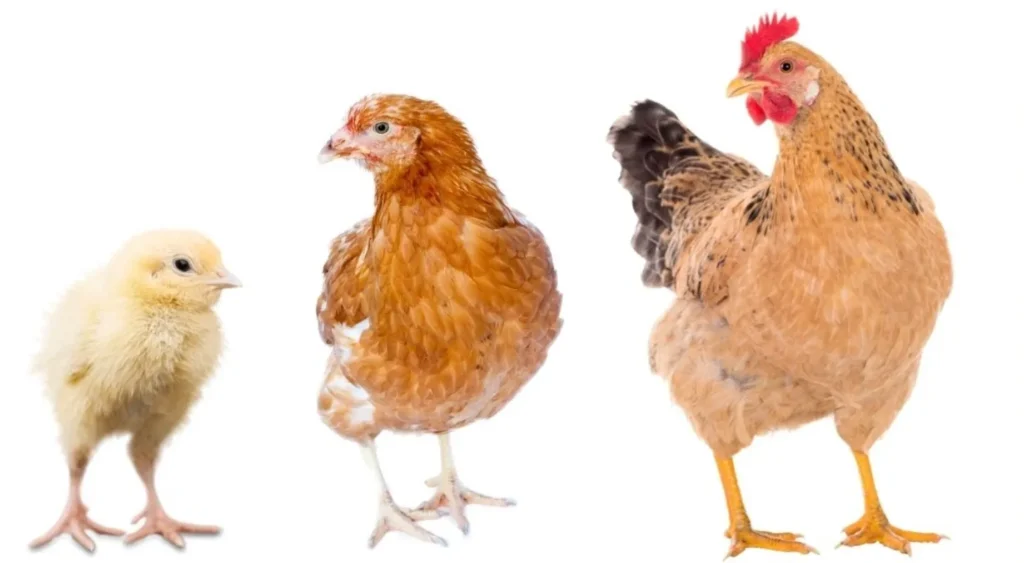
A hen is an adult female chicken, while a rooster is an adult male. A young female chicken is called a pullet, and a young male is called a cockerel. These names matter because each stage has different growth, feeding, and care needs.
The red junglefowl is considered the main wild ancestor of the domestic chicken, and domestication has shaped modern chickens into many breeds with different colors, body sizes, egg-laying abilities, and temperaments. Research and agricultural references connect modern chickens mainly to Southeast Asian junglefowl ancestors.
Another important fact is that chickens are omnivores. They eat grains, seeds, insects, worms, small invertebrates, fruits, greens, and commercial feed. Their natural feeding behavior includes scratching the ground, pecking, searching, and selecting small food items.
The History of Their Scientific Naming, Evolution, and Origin
Scientific Naming of the Chicken
The domestic chicken is commonly identified as Gallus gallus domesticus. The genus Gallus refers to junglefowl, while domesticus shows its domesticated form. Some databases also use Gallus domesticus, reflecting differences in taxonomic treatment.
Evolution from Wild Junglefowl
The modern chicken evolved from wild junglefowl, especially the red junglefowl. Scientific evidence suggests that red junglefowl from South and Southeast Asia played the primary role in chicken ancestry. Some studies also suggest genetic influence from other junglefowl, such as the grey junglefowl.
Origin and Domestication
Chickens were domesticated thousands of years ago. Their early relationship with humans likely began near settlements, crop fields, and areas of food waste, where junglefowl found easy access to food and shelter. Over time, humans selected for tameness, egg production, body size, feather color, and survival.
Global Spread
After domestication, chickens spread through trade, migration, farming, and cultural exchange. Today, the chicken is one of the most common domestic animals in the world and plays a major role in food, agriculture, education, and rural livelihoods.
Their Reproductive Process, Giving Birth, And Rising Their Children
Chickens Do Not Give Live Birth
Chickens do not give live birth. Instead, a hen lays eggs. If a rooster mates with the hen and fertilization occurs, the egg can develop into a chick when kept under proper warmth and humidity.
Mating and Fertilization
The reproductive process begins when a mature rooster mates with a mature hen. Fertilization happens inside the hen before the egg is fully formed. After this, the egg develops its yolk, albumen, shell membranes, and hard outer shell.
Egg Laying
A healthy laying hen can produce eggs regularly, although the number depends on breed, age, light exposure, feed quality, and health. FAO notes that commercial laying hens can lay over 300 eggs per year, while indigenous hens may lay far fewer eggs.
Incubation Period
A fertilized chicken egg normally needs 20 to 21 days of incubation. Natural incubation happens when a broody hen sits on her eggs. Artificial incubation uses an incubator to control temperature, humidity, and turning.
Raising the Chicks
After hatching, chicks need warmth, safety, clean water, and high-protein food. A mother hen protects them, teaches them to peck, warns them about danger, and keeps them warm under her wings. In artificial brooding, humans provide heat lamps or brooders until chicks grow enough feathers to regulate body temperature.
Stages of the Life Cycle of the Chicken
1. Egg Stage
The egg stage is the first stage of the chicken’s life cycle. Inside the fertilized egg, the embryo slowly develops organs, bones, eyes, feathers, a beak, legs, and internal systems. The yolk works as the main food source, while the eggshell protects the growing embryo.
During incubation, the egg must stay warm and properly positioned. If conditions are poor, the embryo may stop developing. Near the end of incubation, the chick uses its egg tooth to break the shell and begin hatching.
2. Chick Stage
The chick stage begins after hatching. A chick is soft, small, weak, and covered with down instead of full feathers. It can walk and peck soon after hatching, but it still needs warmth and protection.
Chicks grow very quickly during the first few weeks. They eat starter feed, drink water, and learn social behavior. Their first feathers begin replacing soft down, and they become more active every day.
3. Juvenile Stage
The juvenile stage is the growth period between the chick and the adult. During this stage, the young chicken becomes stronger, develops adult feathers, improves balance, and begins to show flock behavior.
Young females are called pullets, and young males are called cockerels. Their combs and wattles may become more visible. They begin to scratch, forage, dust bathe, perch, and explore more confidently.
4. Adult Chicken Stage
The adult stage begins when the chicken reaches sexual maturity. Hens may start laying eggs around 18 to 24 weeks, depending on breed and environment. Roosters begin showing mating behavior, crowing, and flock protection.
Adult chickens continue to eat, forage, communicate, reproduce, and maintain social order. With good care, some chickens live many years beyond their first laying season.
Their Main Diet, Food Sources, And Collection Process Explained
Chickens are omnivorous, meaning they eat both plant and animal foods. Their natural diet is diverse, especially when they are allowed to forage outdoors.
In natural or free-range conditions, chickens collect food by scratching the soil with their feet and pecking at small items. This behavior helps them uncover insects, seeds, worms, roots, and tiny invertebrates.
Common chicken food sources include:
- Grains and seeds: Corn, wheat, rice, oats, millet, and other grains provide energy.
- Insects and worms: Beetles, termites, ants, larvae, grasshoppers, and earthworms provide protein.
- Green plants: Grass, vegetable leaves, weeds, and soft herbs provide vitamins and fiber.
- Fruits and kitchen scraps: Small pieces of fruit and safe vegetable leftovers can add variety.
- Commercial feed: Balanced poultry feed provides protein, calcium, minerals, and vitamins.
- Calcium sources: Laying hens need calcium for strong eggshells, often supplied through oyster shell or limestone.
Wild junglefowl and free-ranging chickens search the ground, leaf litter, crop edges, and open soil for food. Red junglefowl eat fruits, seeds, insects, roots, and invertebrates, underscoring the natural dietary diversity underlying domestic chicken behavior.
Food collection is not only about eating. Scratching, pecking, and foraging keep chickens active, reduce boredom, improve muscle use, and support natural behavior. A healthy chicken diet should always include clean water, safe feed, and protection from toxic plants, spoiled food, mold, and contaminated soil.
How Long Does A Life Cycle of the Chicken Live
The lifespan of a chicken depends heavily on breed, purpose, care, environment, disease control, predator risk, and whether it is raised in a backyard, a commercial system, a sanctuary, or a free-range setting.
A chicken’s biological potential can be much longer than its commercial life. Many backyard or pet chickens can live several years, while chickens raised for industrial meat or egg systems usually have much shorter lives because they are removed from production early.
- Average backyard lifespan: Many backyard chickens live around 5 to 10 years when protected from predators and disease.
- Well-cared pet chickens: Some may live beyond 10 years, especially heritage breeds with good housing and veterinary care.
- Maximum reported age: Animal welfare sources note that domestic chickens can sometimes live up to about 15 years under very good care, with rare reports of even older birds.
- Commercial broilers: Meat chickens often live only weeks in industrial systems because they are bred for rapid growth and processed young.
- Commercial laying hens: Laying hens usually live longer than broilers in production, but their productive life is still much shorter than their natural lifespan.
- Breed effect: Heritage breeds often live longer than fast-growing production breeds.
- Predator risk: Chickens exposed to dogs, foxes, snakes, hawks, raccoons, and other predators may have a much shorter life.
- Disease and parasites: Respiratory diseases, mites, worms, bacterial infections, and poor hygiene can reduce lifespan.
- Nutrition: Balanced feed, calcium, clean water, and safe foraging improve health and longevity.
- Housing: Dry bedding, ventilation, shade, night protection, and clean nesting areas help chickens live longer.
- Stress level: Overcrowding, heat stress, bullying, and poor handling can shorten life.
- Egg-laying pressure: High-production hens may face more reproductive stress than slower-laying breeds.
- Climate: Extreme heat, cold, wet conditions, and poor shelter can reduce survival.
- Human care: Regular observation, vaccination where appropriate, parasite control, and predator-proof housing improve lifespan.
In simple words, a chicken can live much longer when it is treated as a living animal with proper care rather than only as a production unit.
Life Cycle of the Chicken Lifespan in the Wild vs. in Captivity
Lifespan in the Wild
Domestic chickens are not truly wild animals in the same way as their ancestor, the red junglefowl. When domestic chickens live outside human care, they face predators, food shortages, parasites, disease, weather stress, and competition. As a result, feral or unmanaged chickens often live shorter lives than protected backyard chickens.
Wild junglefowl may survive for several years, but their lifespan depends on habitat quality, predator pressure, and food availability. Their natural survival strategy includes roosting in trees, foraging in groups, hiding in vegetation, and breeding during favorable conditions.
Lifespan in Captivity
In captivity, chickens can live longer if they receive clean housing, balanced food, fresh water, medical attention, and protection. Backyard chickens may live 5 to 10 years, and some well-kept birds can live even longer.
However, captivity does not always mean a long life. In commercial production, broilers and laying hens often have short lives because they are raised for meat or egg output. Animal welfare sources report that broilers may be processed at a very young age, while laying hens are often kept for a limited production period.
Key Difference
The biggest difference is protection. Chickens in safe, caring environments usually live longer than chickens exposed to predators or intensive production pressure.
Importance of the Life Cycle of the Chicken In This Ecosystem
Natural Pest Control
Chickens help control insects, larvae, worms, and small pests through foraging. In gardens, farms, and rural yards, chickens can naturally reduce pest populations by scratching and pecking.
Soil Turning and Nutrient Cycling
As chickens scratch the ground, they loosen soil, mix organic matter, and help break down plant waste. Their manure adds nitrogen, phosphorus, and potassium, which can improve soil fertility when managed properly.
Food Web Connection
Chickens are part of the food web. They eat insects, seeds, and plant materials, while also serving as prey for predators in unmanaged environments. This connection shows how chickens interact with other animals and natural systems.
Human Food Security
Chickens are important for human food systems because they provide eggs and meat. FAO highlights chickens as a major poultry species, with Asia holding a large share of the global chicken population and commercial layers capable of high egg output.
Educational Importance
The life cycle of the chicken is widely used in schools and farms to teach reproduction, embryology, animal growth, responsibility, and food production. Watching eggs hatch helps children and adults understand life development clearly and practically.
What To Do To Protect Them In Nature And Save The System For The Future
1. Protect Natural Junglefowl Habitats
- Preserve forests, forest edges, grasslands, and natural vegetation where red junglefowl and related wild birds live.
- Avoid unnecessary deforestation and habitat destruction.
- Support native plant growth that provides food, cover, and nesting protection.
2. Improve Chicken Welfare
- Provide clean housing, safe space, shade, ventilation, and predator protection.
- Avoid overcrowding because it causes stress, disease, feather loss, and aggression.
- Give chickens access to natural behaviors such as scratching, dust bathing, perching, and foraging.
3. Use Responsible Farming Practices
- Manage manure properly to protect soil and water quality.
- Avoid overuse of antibiotics and follow veterinary guidance.
- Use balanced feed and clean water to reduce disease and improve bird health.
4. Control Disease and Parasites
- Keep coops clean and dry.
- Separate sick birds quickly.
- Use vaccination and parasite control where recommended by local poultry experts.
5. Protect Ecosystem Balance
- Do not release domestic chickens into sensitive natural habitats.
- Feral chickens may disturb native plants, insects, reptiles, and wild birds.
- Keep backyard chickens responsibly contained where they cannot damage local ecosystems.
Fun & Interesting Facts About the Life Cycle of the Chicken
- Chickens can recognize flock members and form social relationships.
- A baby chick can usually walk and peck within hours after hatching.
- Chickens use many different sounds to communicate danger, food, comfort, and social signals.
- A hen may turn her eggs many times during natural incubation to support embryo development.
- The temporary egg tooth helps a chick break the shell during hatching.
- Chickens take dust baths to clean their feathers and reduce parasites.
- The pecking order is a real social ranking system within a flock.
- Hens do not need roosters to lay eggs, but eggs must be fertilized by a rooster to hatch chicks.
- Chickens have strong color vision and can notice small movements quickly.
- A broody hen can become very protective of her eggs and chicks.
- Some chicken breeds are better layers, while others are better for meat, beauty, cold climates, or companionship.
- Chickens swallow small stones or grit, which helps grind food in the gizzard.
- Roosters often warn hens when they see danger.
- Chicks learn by watching their mother and other flock members.
- The life cycle of the chicken is one of the easiest animal life cycles to observe directly.
Frequently Asked Questions (FAQs)
Q: What are the four stages of the life cycle of the chicken?
A: The four main stages are egg, chick, juvenile, and adult chicken. Each stage shows a different level of growth, behavior, and independence.
Q: How long does a chicken stay inside the egg?
A: A fertilized chicken egg usually takes about 20 to 21 days to hatch when incubation conditions are suitable.
Q: Can hens lay eggs without a rooster?
A: Yes. A hen can lay eggs without a rooster. However, those eggs will not develop into chicks unless a rooster fertilizes them.
Q: What do chickens eat naturally?
A: Chickens naturally eat seeds, grains, insects, worms, greens, fruits, and small invertebrates. They are omnivores, so their diet includes both plant and animal-based foods.
Q: How long can a chicken live?
A: Many backyard chickens live around 5 to 10 years, while very well-cared-for chickens can sometimes live longer. Commercial chickens usually have much shorter lives because they are raised for meat or egg production.
Final Word
The life cycle of the chicken is a simple but fascinating journey from egg to adult bird. It begins with a fertilized egg, continues through the fragile chick stage, moves into the growing juvenile period, and ends with a mature hen or rooster capable of reproduction. Chickens are more than common farm animals; they are social, intelligent, useful, and deeply connected to human history.
By learning about their growth, diet, reproduction, lifespan, and ecological role, we understand how important proper care and responsible farming really are. Healthy chickens need clean food, fresh water, safe shelter, natural behavior, and protection from disease and predators. Whether raised in a backyard, on a farm, as part of a school project, or in a conservation setting, chickens deserve thoughtful care. Protecting chickens and their wild relatives also helps support food security, biodiversity, soil health, and future generations.
Also Read: life cycle of enterobiasis
About the Author